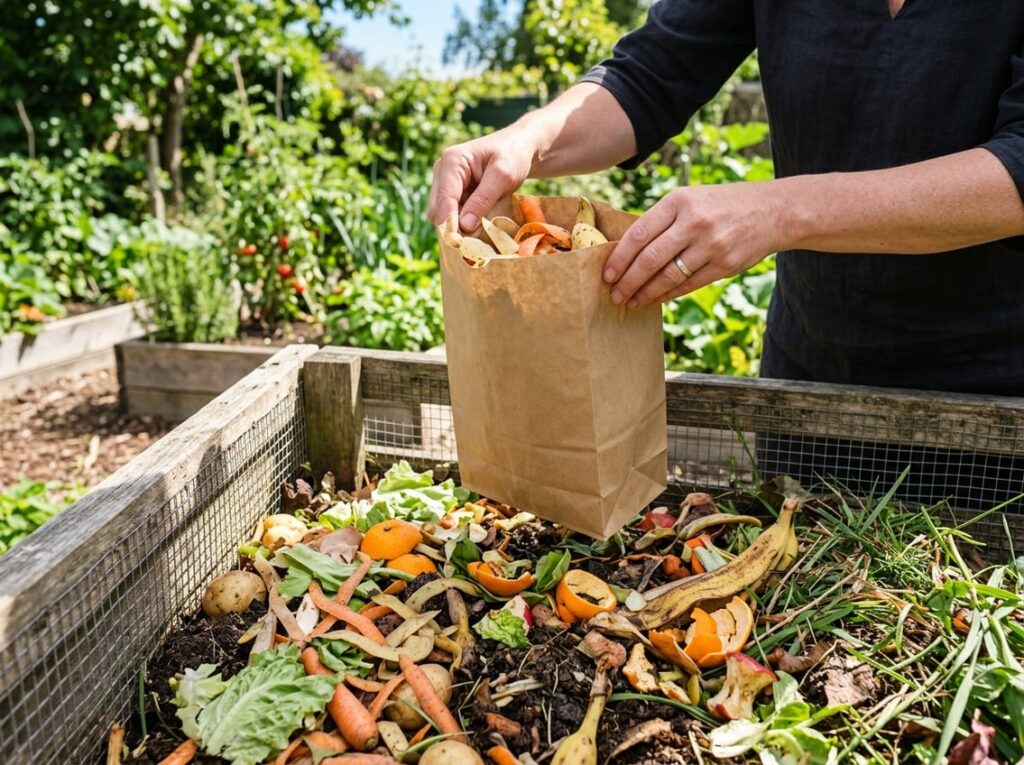
Those paper bags piling up in your pantry aren’t just clutter—they’re garden gold waiting to happen. Instead of tossing them in the recycling bin or the trash, you can turn them into rich compost that feeds your plants and cuts down your environmental footprint.
The best part? This transformation happens surprisingly quickly, often in less than a month.
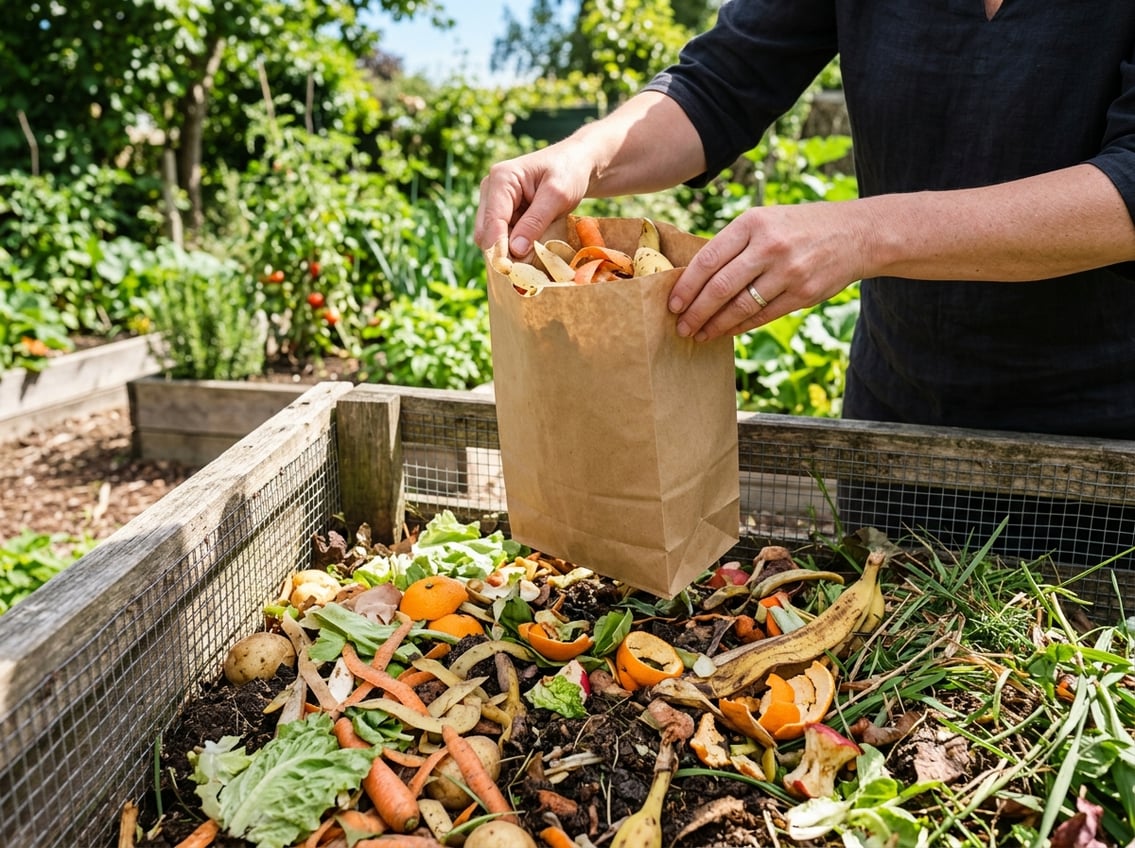
Brown paper bags are compostable and serve as an excellent carbon-rich material for your compost pile. When you compost paper bags, you add structure and help balance the nitrogen-rich food scraps in your bin.
Whether you have a backyard pile, a tumbler, or use a municipal composting program, figuring out which bags work best and how to prep them will help you get the most out of this simple habit.
Key Takeaways
- Paper bags can compost in under 30 days when you prep them right
- Most brown paper bags are safe to compost, but skip types with coatings or weird additives
- Shredding paper bags speeds up decomposition and helps create better compost structure
Why Paper Bags Are Perfect for Quick Composting (In Under 30 Days)
The Natural Advantage
Paper bags come from wood pulp—basically trees broken down into cellulose fibers. Since they’re plant-based, they naturally return to the soil when you expose them to moisture and compost microbes.
When you’re composting paper bags, you’re dealing with processed plant material that starts decomposing almost immediately.
Synthetic materials can linger in your compost for decades or even centuries. Paper bags? Totally different story.
They start breaking down right away once they get wet and mix with the bacteria and fungi in your compost.
Carbon-Rich “Browns”
Your compost pile needs a balance between two types of materials. “Greens” provide nitrogen—think food scraps and grass clippings. “Browns” provide carbon—like paper bags and dry leaves.
Paper bags work as brown material with a carbon-to-nitrogen ratio of about 150-200:1. This makes them perfect for balancing out all those kitchen scraps.
A lot of home composters add too many food scraps and not enough carbon. Shredded paper bags fix that imbalance fast.
When you add paper bags, the microbes get the carbon they need to process all that nitrogen-heavy kitchen waste.
Environmental Impact
Paper bags can cause different problems depending on where they end up. In landfills, they decompose without oxygen and produce methane—a greenhouse gas that’s way worse than carbon dioxide.
You avoid this problem when you compost paper bags instead. Your compost pile has oxygen, so the bags break down without creating methane.
Each pound of paper you compost saves about 3.5 pounds of CO2 emissions compared to landfill disposal.
Composting also keeps things in a natural cycle. Trees become paper, paper becomes compost, compost feeds new plants. It’s a satisfying, circular use of resources.
Decomposition Timeline
Paper bags break down quickly when your compost pile has enough moisture, air, and active microbes.
- 3-5 days: Shredded paper bags show visible signs of decomposition
- 14-30 days: Most paper bag material disappears completely
- 2-3 months: Full integration into finished compost
This speed makes paper bags one of the fastest browns to process. Twigs or bark, for comparison, can take a year or more.
7 Types of Paper Bags You CAN Compost (With Decomposition Times)
Plain Brown Grocery Bags
Plain brown grocery bags break down in 14-21 days if you shred them first. These uncoated paper bags contain natural lignins that actually help your compost microbes.
The thickness gives your pile some structure, but it’s best to tear or shred these bags before adding them.
Paper Lunch Bags
Paper lunch bags decompose in just 10-14 days. Their thin material makes them one of the quickest paper products to break down.
You don’t need to do much—just crumple them up before tossing them in. More surface area means faster breakdown.
Paper Shopping Bags with Paper Handles
These bags take 14-30 days to decompose, depending on how thick they are. The twisted paper handles might take a bit longer than the bag itself.
Bags from stores like Whole Foods or Trader Joe’s fit this category. All parts will eventually break down.
Bakery Bags with Minimal Grease
The slightly translucent bags that hold your croissants or bread decompose in about 10-14 days. Small amounts of food residue or oil stains can even speed up decomposition.
These stains add nitrogen to your compost and attract the right microbes.
Paper Produce Bags
The thin brown bags from the produce section break down in just 7-14 days. Their minimal thickness makes them some of the fastest paper items to compost.
These compostable paper bags are a great carbon source for your bin.
Kraft Paper Mailing Envelopes
Kraft paper envelopes decompose in 14-21 days after you remove any plastic windows or labels. Most adhesives in modern envelopes are plant-based and compost-friendly.
Tear these envelopes into smaller pieces to help them break down faster.
Paper Gift Bags
Plain or lightly printed gift bags take 14-30 days to decompose. The timeline depends on how thick they are and how much printing they have.
Heavier bags with more decoration take longer. You can compost most types of paper bags if you prep them right.
5 Paper Bags You Should NEVER Compost (And What To Do Instead)
Plastic-Lined Bags
A lot of coffee bags, pet food bags, and some food packaging have a shiny plastic interior. This plastic layer won’t break down in your compost, and it can leave behind microplastics that aren’t good for your garden.
What to do instead: Check if your local recycling accepts these bags. If not, maybe repurpose them for storage, or just toss them in the trash if you have to.
Heavily Dyed or Printed Bags
Bags with lots of metallic printing, neon colors, or super-bright designs often contain inks with heavy metals or chemicals you don’t want in your soil.
What to do instead: Use these bags for storage, gift wrap, or crafts. If it’s just a small logo, it’s usually fine to compost.
Water-Resistant Treated Bags
Some paper bags are treated to repel water. These treatments often include PFAS or other stubborn chemicals that stick around in your soil.
What to do instead: Avoid composting any bag that stays dry even when you soak it. Just toss these in the regular trash.
Bags with Non-Paper Handles
Some shopping bags have plastic, rope, or fabric handles. While paper products can be composted safely, those non-paper handles can’t.
What to do instead: Remove the non-compostable handles first. Shred and compost the paper part, then recycle or toss the handles as needed.
“Compostable” Plastic Bags
These bags need industrial composting facilities that get really hot. Your backyard compost just can’t reach those temperatures.
What to do instead: Check if your area has commercial composting. If not, unfortunately, these go in the trash—even if the label says “compostable.”
How to Speed Up Paper Bag Composting in 3 Easy Steps
1. Shred It
Tearing your paper bags into small pieces is the number one way to speed things up. Cutting bags into 1-inch strips gives decomposers more surface area to work on.
You can fold bags and cut strips with scissors—it takes about 2 minutes per bag. If you want to go all-in, tear bags into 1-inch squares. It’s a bit more work but helps prevent clumping.
2. Wet It
Dry paper repels water at first, which slows everything down. Pre-moistening your shredded paper fixes that.
Toss your shredded paper in a bucket and spray it until it feels like a wrung-out sponge. Then add it to your compost.
If you’re in a hurry, layer dry paper thinly in your pile and water the whole thing. It works, just not quite as fast as pre-wetting.
3. Mix It
Paper bags need nitrogen-rich “green” materials to break down quickly. Without them, paper can sit in your pile for ages.
Best mixing ratio:
| Material Type | Amount |
|---|---|
| Nitrogen-rich materials (food scraps, coffee grounds, grass clippings) | 3 parts |
| Shredded paper bags | 1 part |
Layer your pile: 2 inches of greens, then 1 inch of shredded paper. Keep repeating as you build.
Troubleshooting Common Paper Bag Composting Problems
My paper bags aren’t breaking down
Paper bags need moisture and nitrogen to decompose. If they’re just sitting there, you’re probably missing one.
The fix: Turn your pile and add water until it feels like a wrung-out sponge. If you haven’t added greens lately, mix in some fresh grass, coffee grounds, or veggie scraps.
The paper is matting together in clumps
Wet paper can clump up and block airflow, causing dead zones in your compost.
The fix: Tear bags into smaller pieces before adding. Mix them well with other materials. If you already have clumps, pull them apart and remix with greens.
I’m concerned about inks in my compost
Most modern paper bag inks are soy-based and break down safely. Some specialty or old inks might not be so friendly.
The fix: Stick to bags with minimal printing. Avoid metallic, neon, or super-bright colors. Small logos or basic text usually aren’t a problem.
My apartment is too small for composting
Small spaces can still handle composting paper and other materials.
The fix: Try a bokashi system (ferments waste in a sealed bucket) or vermicomposting with red wiggler worms. Both work in tight spots and don’t smell if you keep them up.
6 Creative Uses for Paper Bags Beyond Composting
1. Weed Suppression
You can use flattened paper bags under mulch to block weeds for 3-4 months. They slowly add organic matter to your soil as they break down.
Lay the bags flat, overlap the edges by about 6 inches, and wet them so they stay put. Top with mulch, and you’re good to go.
2. Seed Starting Pots
Fold paper bags into little biodegradable planters. You can plant them directly into the soil.
This method works especially well for plants like cucumbers and squash that hate having their roots disturbed.
3. Fruit Ripening Accelerator
Put unripe fruit in a closed paper bag. It traps ethylene gas and helps fruit like avocados, peaches, and tomatoes ripen faster.
Just check daily so you don’t end up with mush.
4. Vegetable Crisper Liner
Line your fridge drawers with paper bags to soak up extra moisture. This keeps greens and berries fresh a bit longer.
Swap out the bags every week for best results.
5. Garden Planning Envelopes
Make simple envelopes from paper bags to stash seed packets, plant tags, and garden notes. Paper bags serve multiple purposes when it comes to organizing garden odds and ends.
Sort your envelopes by season or by garden bed. The breathable paper helps keep moisture away, so seeds stay dry.
6. Frost Protection
Paper bags can save your seedlings during a surprise frost. Cut the bags open and lay them flat.
Drape these sheets over plants if cold weather sneaks up. Hold them down with rocks or stakes so they don’t blow away.
Quick Guide: Adding Paper Bags to Different Compost Systems
Traditional Bins
Shred the bags and layer them between food scraps in your compost bin. Aim for paper to make up about 5-10% of your total bin volume.
Turn your pile every week or two to help it break down. This approach keeps your compost balanced and humming along.
Worm Bins
Add shredded, damp paper bags as bedding, but don’t go overboard—keep it to 10% or less of your worm bin. Worms will nibble on the paper, but they’re more into softer kitchen scraps.
Too much paper slows things down, so sprinkle it in lightly.
Compost Tumblers
Toss in pre-moistened paper to soak up some of the wetness from kitchen scraps. Tumblers can dry out the paper fast, so check moisture and spritz with water if it’s looking parched.
Regular checks keep the process rolling.
Bokashi Systems
Layer shredded paper between food waste to absorb extra moisture and add some structure. The paper won’t ferment like your food scraps, but it’ll start breaking down in the bucket.
Once you bury your bokashi pre-compost, the paper will finish decomposing in the soil.
Trench Composting
Dig a trench 8-12 inches deep right in your garden. Bury moistened, shredded paper mixed with kitchen scraps, then cover with soil.
It takes about 30-60 days for everything to break down before you can plant in that spot.
FAQ: What Gardeners Ask About Composting Paper Bags
How long does it take for paper bags to decompose in compost?
If you shred the bags first, they break down in 14-30 days in an active compost pile. Whole bags take a lot longer—think two or three months, maybe more.
Moisture, temperature, and how much nitrogen-rich stuff you add all play a role in the speed. Smaller pieces always help things along.
Will the ink on printed paper bags harm my plants?
Most paper bags use soy-based inks, so they’re totally fine for composting. Bags with standard black printing or simple logos are safe.
Watch out for bags with metallic or shiny inks, super bright colors, or wild, vibrant designs. Those might have heavy metals or weird chemicals.
If you’re unsure, just skip the flashy ones.
Can I compost paper bags with food stains?
Yes, you can compost bags with food residue. A bit of oil or grease from bakery bags actually helps your compost along.
Tear greasy bags into smaller pieces so they don’t clump together. Even bags with heavier stains are fine if you break them up first.
What’s the fastest way to compost paper bags?
Here’s the quick method:
- Shred bags into 1-inch strips.
- Moisten them well.
- Mix with nitrogen-rich stuff like grass clippings or coffee grounds.
- Turn the pile every week.
Keep the pile damp but not soggy. If you do all this, your paper bags can disappear in about two weeks.
Are staples in paper bags a problem for compost?
Metal staples won’t break down, but they won’t mess up your compost, either. You can pull them out first or just leave them in.
If you leave them in, sift your finished compost before using it for delicate jobs like seed starting. They won’t hurt plants in regular garden beds.
From Checkout to Garden: Your 7-Day Paper Bag Transformation Plan
Day 1: Collect and Store
Set up a spot to collect paper bags as they come in—maybe a cardboard box or a big bin. Keep them dry so they don’t start to break down too soon.
Day 2: Prep Work (5 minutes)
Pull off plastic windows, synthetic handles, and stickers. Flatten each bag to make shredding easier.
Day 3: Shred (3 minutes)
Rip or cut the bags into 1-inch strips. Smaller pieces give microbes more to chew on, so things move faster.
Day 4: Add to Compost
Lightly moisten the shredded paper. Layer it into your compost bin with kitchen scraps or grass clippings.
The green stuff balances out the carbon in the paper.
Days 5-6: Turn Once
Grab a pitchfork or shovel and give your compost pile a good mix. This spreads the paper around and lets you see if it needs more water.
If it looks dry, add a bit.
Day 7: Maintain Routine
Keep adding new materials as you get them. Turn the pile every week or two.
That regular attention keeps the composting process on track.
Week 4: Harvest Results
After about a month, you’ll notice your paper bags are breaking down nicely. They’ll look darker and start blending in with the rest of the compost.
Full composting takes two or three months, but you’re well on your way.
Frequently Asked Questions
Are paper bags safe to add to a home compost pile?
Yes, paper bags are totally safe to compost at home. They count as brown or carbon-rich material, which helps balance your compost.
Paper bags break down naturally and add carbon to your pile. Just toss them in with your food scraps.
They’ll decompose in one to three months under normal conditions.
Do printed logos or ink on paper bags affect compostability?
Most modern paper bags use soy-based or veggie-based inks that break down just fine. You can add bags with printed designs to your pile.
The ink breaks down along with the paper. Bags with heavy wax coatings or glossy finishes are a different story—they might slow things down or leave bits behind.
Should paper bags be shredded or torn up before composting?
Tearing or shredding paper bags helps them break down faster. Smaller pieces mean more surface area for compost microbes to work on.
You don’t have to shred them, though. Whole bags will still compost, just more slowly.
Why tear them up?
- They break down quicker.
- Mix better with other stuff.
- Distribute more evenly.
- Easier to layer with food scraps.
Can brown paper grocery bags go in a municipal green bin program?
Most green bin programs take brown paper grocery bags. Lots of cities even prefer them as liners for kitchen scraps.
Check your local rules, though. Some places want only food waste, while others accept compostable paper. Your city probably has a list online or a number you can call.
Paper bags usually get processed right along with yard waste and food scraps.
Are store-branded paper bags from major grocers typically compostable?
Store-brand grocery bags are usually just plain kraft paper, so they’re compostable. Most big stores stick to the basics.
Standard grocery bags are made from simple paper pulp with no heavy coatings. They break down great in compost.
Some specialty bags have grease resistance or water-proofing, and those might not compost as easily. Always worth a quick check if you’re not sure.
What materials or coatings on paper bags make them unsuitable for composting?
Several coatings and additions can make paper bags poor for composting.
Problem materials:
- Plastic lamination or coating
- Wax layers for water resistance
- Metallic foil decorations
- Plastic handles or reinforcements
- Heavy adhesive tape
Bags with these features just don’t break down like they should. The coatings can affect compost quality because they stick around long after the paper’s gone.
Before composting, try to pull off tape, labels, and any plastic bits. If a bag feels waxy or has that weird shiny coating, it’s probably not great for your compost pile.
Honestly, plain brown paper bags without all the extras are the easiest and safest choice.