
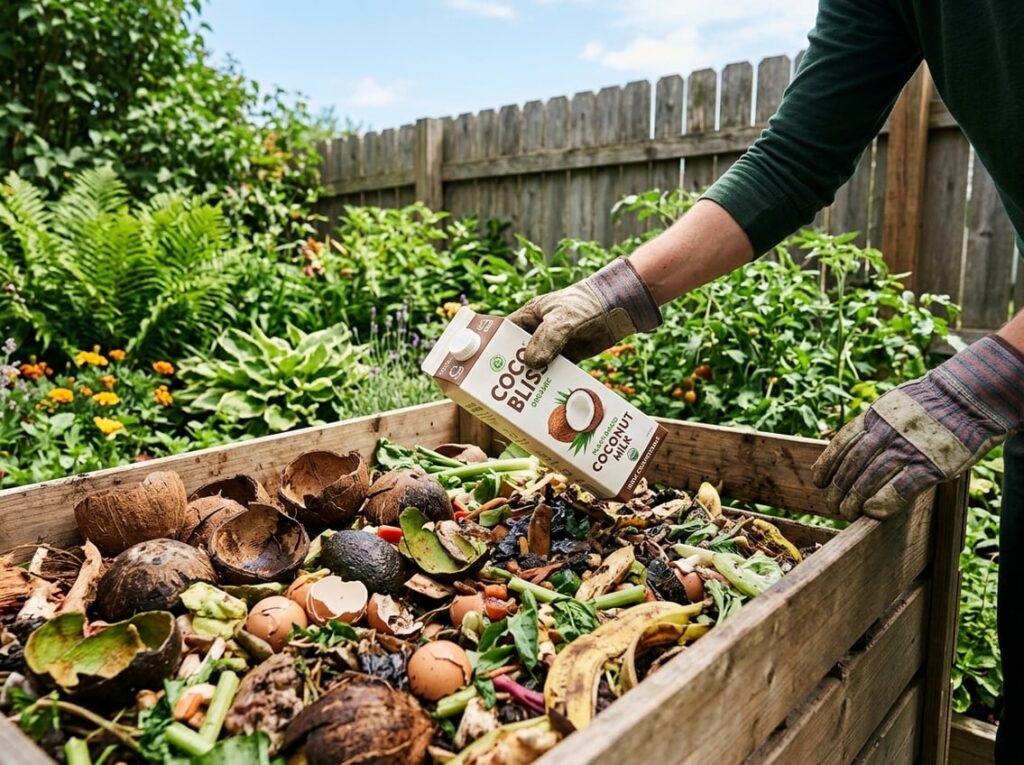
Can You Compost Coconut Milk? Quick Guide to Composting Plant Milks in 14 Days
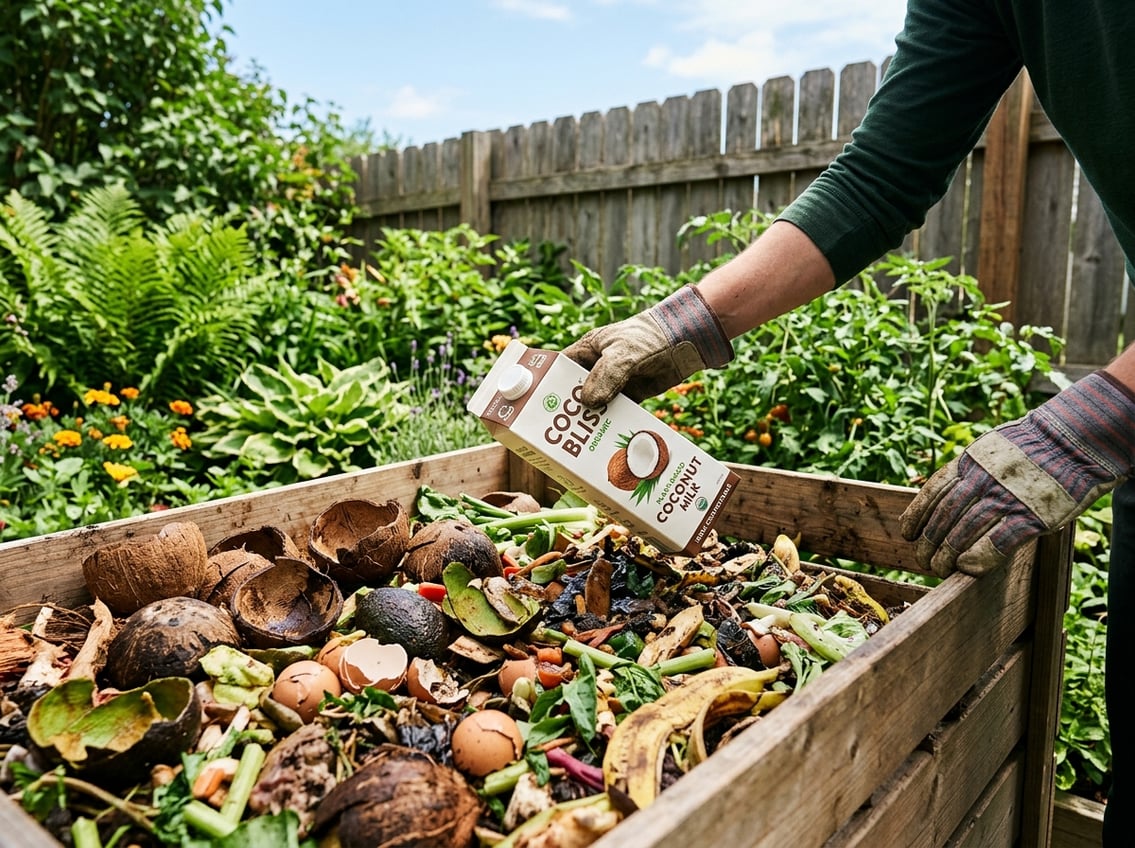
You can absolutely compost coconut milk if you know what you’re doing. It’s a nitrogen-rich green material, but since it’s mostly water, you’ll want to handle it with a little care.
Key steps for 14-day composting:
- Mix coconut milk with dry brown materials like shredded paper or dried leaves using a 1:3 ratio.
- Only pour in small amounts (no more than 1 cup at a time).
- Turn your pile every 2-3 days to keep odors in check.
- Always add the milk to the center of your pile, away from the edges.
Spoiled coconut milk still has nitrogen that helps with decomposition. But if you add too much at once, the fat content can slow things down.
Keep your pile aerated and balanced with plenty of carbon-rich materials. Otherwise, it might get soggy and smelly, and nobody wants to attract pests.
Quick Reference Guide: Composting Coconut Milk
You can compost coconut milk in about 14-21 days if you prep it right. It’s got 17-24% fat, a fair bit of protein, and a whopping 87-89% water.
The carbon-nitrogen ratio sits around 25:1, and it’s slightly acidic with a pH of 6.1-6.5.
Key Properties:
- High moisture means you need to dilute or absorb it.
- It adds potassium, phosphorus, and magnesium.
- Helps out beneficial microorganisms.
- Makes your finished compost hold moisture better.
Preparation Steps:
- Dilute with water before tossing it in.
- Mix with dry brown stuff.
- Bury it in the center of the pile.
- Keep an eye on moisture levels.
Plant milks are compostable if you stick to these basics and don’t get carried away.
What Happens When You Compost Coconut Milk? (The 2-Week Breakdown)
Once you add coconut milk to your compost, things get moving in stages. In the first couple of days, bacteria start munching on the sugars and proteins.
You probably won’t notice much at first, but decomposition is underway. By days 5 to 7, the fats in the coconut milk start breaking down, and that’s when you really need to manage your pile.
Fat can slow the whole process if you ignore it. Keeping your compost at 130-140°F gives you the best shot at breaking everything down in under two weeks.
Turn your pile every 3-4 days to keep oxygen moving and heat even. By the end of two weeks, the coconut milk will have disappeared into your compost, giving your plants a nice nitrogen boost.
The high moisture content needs attention so you don’t end up with pests, but good temps and regular turning usually solve that.
Why Composting Coconut Milk Matters for Your Garden and Planet
Food waste in America is out of control—30-40% of the food supply gets tossed every year. That’s about $161 billion lost and a ton of it ends up in landfills.
Liquids like coconut milk cause even more trouble when they hit the dump. Landfills don’t have oxygen, so coconut milk breaks down and creates methane, which is way worse than carbon dioxide for the planet.
All those nutrients in coconut milk just vanish instead of helping your soil. Composting even a cup of coconut milk keeps waste out of the landfill and puts potassium, phosphorus, and magnesium back into your garden.
Plants love those nutrients. Proper composting makes them available for your veggies and flowers.
It’s a little food cycle, right? The coconut milk that nourished you can now feed your soil, which then grows more food for you. Composting can cut landfill waste by about 20%. Not bad for just tossing your leftovers in the right place.
Quick Answer: Yes, Compost Coconut Milk (With These 3 Simple Steps)
You can compost coconut milk even though it’s pretty fatty (17-24%). The trick is to handle it so you don’t end up with a mess.
Here’s what you do:
- Dilute it: Mix 1 part coconut milk with 3 parts water. This keeps odors down and helps microbes break down the fat.
- Add carbon materials: Cover the diluted coconut milk with brown stuff like dried leaves, shredded paper, or cardboard. This balances everything out and soaks up extra moisture.
- Bury it: Put the diluted coconut milk at least 8 inches deep in your pile. That keeps pests away and helps it break down at the right temperature.
If you follow these steps, coconut milk usually disappears in 14-21 days. You’ll know it’s done when you can’t see any liquid or smell coconut anymore.
What’s Actually in Coconut Milk? (And How It Affects Composting Speed)
Coconut milk breaks down differently depending on where it comes from. Homemade coconut milk composts about two weeks faster than store-bought.
Store versions often have preservatives, stabilizers, or emulsifiers that slow things down. Ingredients like guar gum, carrageenan, or sodium metabisulfite just don’t break down quickly.
Fat makes a huge difference too. With around 20% fat, coconut milk has a lot more than other plant milks.
Fats are slow to break down because microbes need to work harder. But once they get going, those fats give your compost pile a nice energy boost.
Coconut milk’s C ratio is about 25:1, which is pretty close to the ideal compost number. It acts as a “green” compostable material and doesn’t throw off your pile’s balance as much as high-nitrogen foods.
Still, you need to add some carbon materials since it’s so liquid.
5 Proven Methods to Speed Up Coconut Milk Composting
Want to break down coconut milk faster? A few tricks can really help.
Mix with water first. Combine 1 part coconut milk with 3 parts water before you add it to your pile. This makes it easier for microbes to handle the fats.
For a typical 13.5 oz can, you’ll need about 40 oz (5 cups) of water. Use absorbent materials. Pour coconut milk onto dry carbon-rich stuff like leaves, shredded cardboard, or coconut coir.
About 2 cups of these materials will soak up 1 cup of coconut milk. That prevents puddles and keeps things balanced.
Bury it deep. Put coconut milk 8-12 inches into your pile where it’s hottest. This “hot zone” breaks it down up to three times faster than if you just dump it on top.
Add a compost accelerator. Natural boosters like comfrey tea or finished compost bring in helpful microbes. Use about 1 tablespoon per cup of coconut milk for best results with plant milk composting.
Watch the temperature. Keep your pile between 130-140°F with a compost thermometer. Turn it every 3-4 days after adding coconut milk.
That keeps air moving and heat even, so your coconut milk breaks down in less than two weeks.
Solving the 4 Most Common Coconut Milk Composting Problems
Adding coconut milk to your compost can bring up a few issues, but they’re easy to fix.
Fix Bad Smells
If your pile starts to stink, it’s probably gone anaerobic. Turn it right away to get some air in there.
Mix in dry stuff like leaves or shredded paper. You can use a compost aerator tool if you have one, and a thin layer of finished compost on top helps bring in good microbes.
Stop Fruit Flies
Fruit flies show up if you don’t bury your coconut milk deep enough. Get it at least 8 inches down and cover with 2 inches of brown material.
Still getting flies? Add a ¼-inch layer of finished compost as a biofilter.
Dry Out Wet Compost
Too much moisture will slow everything to a crawl. Add dry brown materials like shredded cardboard or sawdust.
Try to keep things about half wet, half dry. Turn the pile to spread moisture and let it air out by leaving the lid off for a day if you need to.
Speed Up Breakdown
Check your temperature—120-140°F is the sweet spot. If it’s too low, add more green materials.
Break up any coconut milk clumps and mix in a handful of finished compost to bring in more active microbes.
Composting Different Plant Milks: Which Breaks Down Fastest?
If you’re composting milk alternatives, the speed really depends on fat and carb content.
Rice milk breaks down fastest—just 10 days—because it’s got less than 1% fat and simple carbs that microbes love. Just dilute it 1:1 with water and toss it in.
Oat milk finishes about 5 days quicker than coconut milk. Its fat content is lower (2-3%), and the higher carbs help microbes work faster.
Protein-rich options like soy and almond milk need a little extra care. Soy milk has about 3% protein, which brings in more nitrogen—great for balancing carbon-heavy piles.
Just make sure to bury it well so you don’t attract pests. Almond milk is a bit tricky with its 1-2% protein, which can create nitrogen pockets if you’re not careful.
Dilute it 1:2 with water and mix it in well for best results.
Beyond Composting: 7 Surprising Uses for Expired Coconut Milk
If your coconut milk is past its prime, don’t toss it just yet. You can still use it in a bunch of practical ways.
Coconut milk that’s up to 5 days past its “best by” date works fine for these non-food uses.
7 Alternative Uses:
- DIY Plant Fertilizer – Dilute coconut milk 1:10 with water for a gentle fertilizer packed with potassium and trace minerals. Use it once a month during the growing season for flowering plants.
- Wood Furniture Polish – Mix equal parts coconut milk and water. Wipe on with a soft cloth and buff dry for a natural shine.
- Hair Conditioning Treatment – The fats and proteins give dry or damaged hair a deep conditioning boost.
- Gentle Facial Cleanser – Natural enzymes help slough off dead skin while fats cleanse gently.
- Leather Conditioner – The oils soften and protect your leather goods.
- Plant Leaf Shine – Wipe diluted coconut milk on houseplant leaves for a little extra gloss.
- Bath Soak Addition – Add to a warm bath for some skin-softening goodness.
Small-Space Solutions: Composting Coconut Milk in Apartments
You can compost coconut milk even if you don’t have a backyard. Apartment composting gives you a few surprisingly easy options for tight spaces.
Bokashi bins use anaerobic fermentation to break down coconut milk. Just pour the milk right in with the bran, snap on the lid, and let it sit. It usually takes about 10 days to make pre-compost.
Worm bins can handle coconut milk, but you’ll want to be careful:
- Add no more than 1 tablespoon per pound of worms each week.
- Dilute the coconut milk 1:3 with water first.
- Spread it around the bin rather than dumping it in one spot.
Balcony composting works if you’ve got a little outdoor room. Dilute your coconut milk, pour it over dry browns in a small compost tumbler, and give it a good spin. This small-space composting method makes turning easy and helps everything break down faster.
Community programs can help if you don’t want to compost at home. Lots of urban composting programs take plant-based milks. Ask at your local community garden, farmers’ market, or check city drop-off spots for plant milk containers with a bit of leftover product.
Your 14-Day Plan for Zero Coconut Milk Waste
Turn leftover coconut milk into compost with this simple, two-week plan.
Week 1: Preparation and Initial Decomposition
- Days 1-2: Collect and dilute your coconut milk (1 part milk to 3 parts water) before adding to your compost pile.
- Day 3: Check if your compost feels soggy; if it does, toss in some dry stuff like leaves or shredded paper.
- Day 5: Turn your pile for the first time to mix things up and get air in there.
- Day 7: Make sure your pile’s heating up to 120-140°F, then give it another turn.
Week 2: Monitoring and Completion
- Day 9: Turn your pile again.
- Day 11: Take a peek for any lingering coconut milk—there shouldn’t be much left.
- Day 14: Do a final check. By now, the coconut milk should be completely integrated into your compost.
Want to get started right away? Pour your leftover coconut milk into a container, add three times as much water, and stir it up. Pour that over dry leaves or shredded paper, toss the whole thing in your compost bin, and cover with a few inches of brown material.
FAQ: Your Coconut Milk Composting Questions Answered
Can you compost canned coconut milk with preservatives?
Yep, you can compost canned coconut milk, even with preservatives. It might break down a little slower—expect about a 5-7 day delay compared to fresh milk. To help it along, dilute canned coconut milk at a 1:4 ratio instead of 1:3.
How much coconut milk can I add to my compost bin at once?
For a standard 3×3 foot compost bin, stick to 2 cups of diluted coconut milk per week. This keeps your pile from getting too wet.
Will coconut milk make my entire compost pile smell bad?
Not if you prep it right. Dilute the milk in compost, add plenty of carbon-rich stuff like dry leaves or shredded paper, and bury it at least 8 inches deep.
Is it better to compost coconut milk or pour it down the drain?
Composting is way better for the environment. Pouring coconut milk down the drain can cause fatbergs in sewage pipes, which nobody wants.
Can I add spoiled coconut milk directly to plants as fertilizer?
Don’t pour spoiled coconut milk straight on your plants. The fat can make soil repel water. Either compost it first or dilute it at least 1:10 before using it on your garden.
Does coconut cream compost differently than coconut milk?
Yes, coconut cream is trickier. It’s about 35% fat, so dilute it more (1:5 ratio) and give it extra time—usually 21-28 days—to break down.
Frequently Asked Questions
Is it safe to add plant-based milk to a backyard compost pile?
You can add plant-based milk to your backyard compost, but you’ll want to be careful. Coconut milk beverage is compostable and counts as a green material.
The main issue is too much liquid. If your pile gets soggy, it won’t break down right. Always dilute plant-based milk before adding it.
Mix the milk with dry browns like leaves, cardboard, or sawdust. This soaks up extra moisture and keeps your pile balanced.
Will adding dairy-free milk attract pests or create odors in compost?
Plant-based milks can cause odors if you don’t handle them right. The high water content can make your compost too wet, and that can get stinky.
The fat and protein in coconut milk can also slow things down. If your pile isn’t breaking down fast enough, it can start to smell before it’s done composting.
To avoid problems:
- Dilute the liquid before you add it.
- Mix it well with carbon materials.
- Bury it in the center of your pile, not on top.
- Add just a little at a time instead of dumping in a big batch.
Pests usually aren’t as interested in plant-based milks as they are in dairy, but any food waste left on top can attract unwanted critters.
How should liquid food scraps be handled to avoid making compost too wet?
Managing moisture is key for good compost. When you add liquid scraps, balance them out with dry materials.
Best practices for liquids:
- Dilute liquids with at least 10 parts water.
- Pour slowly over dry stuff instead of dumping in one spot.
- Make a well in the center of your pile, then add the liquid there.
- Cover liquids right away with brown materials.
- Mix the pile after you add anything wet.
Your compost should feel like a wrung-out sponge. If you squeeze it and water drips out, it’s too wet—add more dry stuff.
If your pile gets soggy, toss in lots of browns and turn it more often. That brings in air and helps things dry.
Can plant-based milk residues be used directly around garden plants without harming them?
Don’t pour plant-based milk straight onto your plants. The high fat content can coat soil and make it repel water.
When soil gets coated with fats, water won’t soak in right. Your plants might end up thirsty even if you’re watering.
If you want to use coconut milk in the garden, try one of these:
Option 1: Compost it first
Let the milk break down fully in your compost before using it as fertilizer.
Option 2: Heavy dilution
Mix one part coconut milk with at least 10 parts water. That cuts the fat enough so it won’t hurt your soil.
Even then, only use it occasionally and in small amounts. Too much can still build up fats over time.
What composting method (hot composting, cold composting, or bokashi) handles food liquids best?
Different composting methods deal with liquids differently. Some handle wet scraps better than others.
| Method | Temperature | Liquid Handling | Best For | Time to Compost |
|---|---|---|---|---|
| Hot composting | 130-160°F | Good—heat speeds breakdown | Large quantities, fast results | 1-3 months |
| Cold composting | Ambient | Poor—liquids slow process | Small amounts, low maintenance | 6-12 months |
| Bokashi | Ambient | Excellent—fermentation process | All food waste, including liquids | 2-4 weeks (plus soil burial) |
Hot composting works well for liquids since the heat speeds things up. Active microbes process wet stuff quickly, and turning the pile helps keep moisture in check. You’ll need to keep the carbon-to-nitrogen ratio right and turn your pile often.
Cold composting isn’t great for liquids. Without heat, wet materials can just sit there and smell. This method is okay if you only add a little liquid and mix it with lots of dry stuff.
Bokashi is awesome for wet food scraps. You can add coconut milk and other liquids straight into the bucket. The process makes a liquid fertilizer (bokashi tea) that you drain and use in the garden after diluting.
Which common kitchen scraps should never be added to home compost?
Some kitchen scraps just don’t belong in a backyard compost pile. If you want your compost to stay healthy and actually work, it’s best to skip a few things.
Never compost:
- Meat, fish, and bones – These will attract pests and start to smell awful as they rot.
- Dairy products – Cheese, milk, and yogurt go rancid fast and bring in animals you don’t want.
- Oils and fats – They coat other materials and slow everything down, making decomposition a pain.
- Pet waste – Cat and dog poop can carry nasty pathogens you really don’t want in your garden.
- Diseased plants – Plant diseases can survive the composting process and infect your garden later.
Use caution with:
- Citrus peels – A little is fine, but too much can make your compost way too acidic.
- Onions and garlic – These can slow down worm activity, especially in worm bins.
- Bread and grains – They’ll attract pests if you don’t bury them well enough.
- Cooked foods – Most cooked stuff only works if your compost pile stays hot; otherwise, it’s better to leave them out.
You can safely compost most fruit and veggie scraps, coffee grounds, tea bags, eggshells, yard trimmings, and paper products. These break down easily and won’t cause you headaches.