
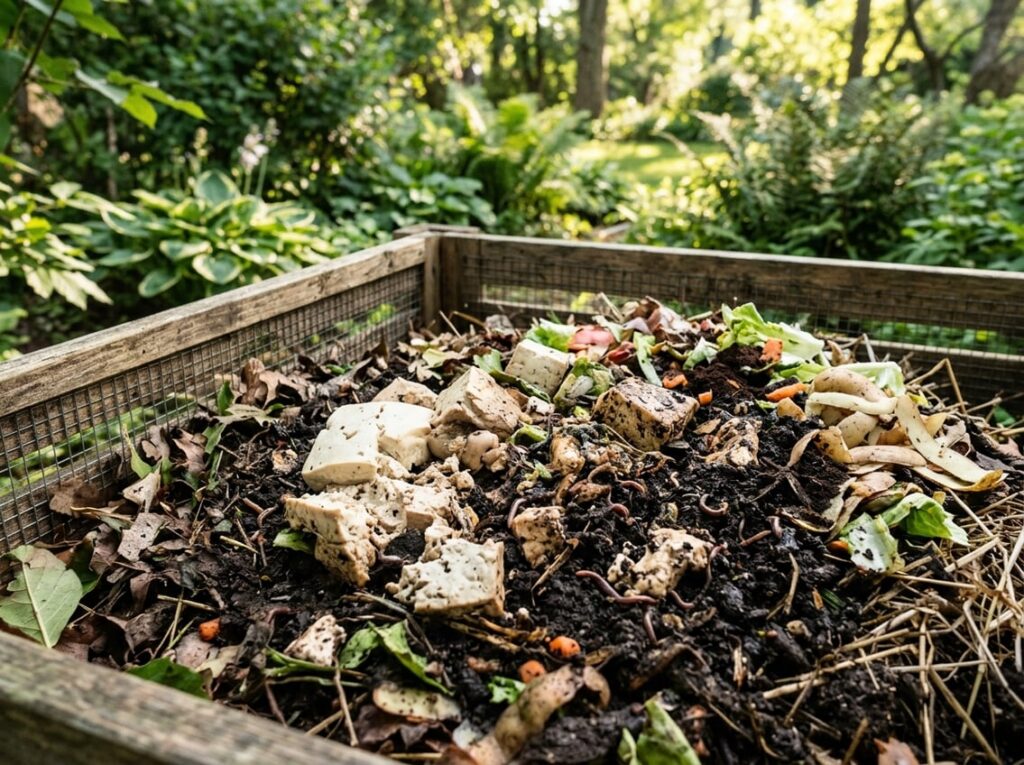
Can You Compost Tofu? Fast Decomposition Guide for Soy Products
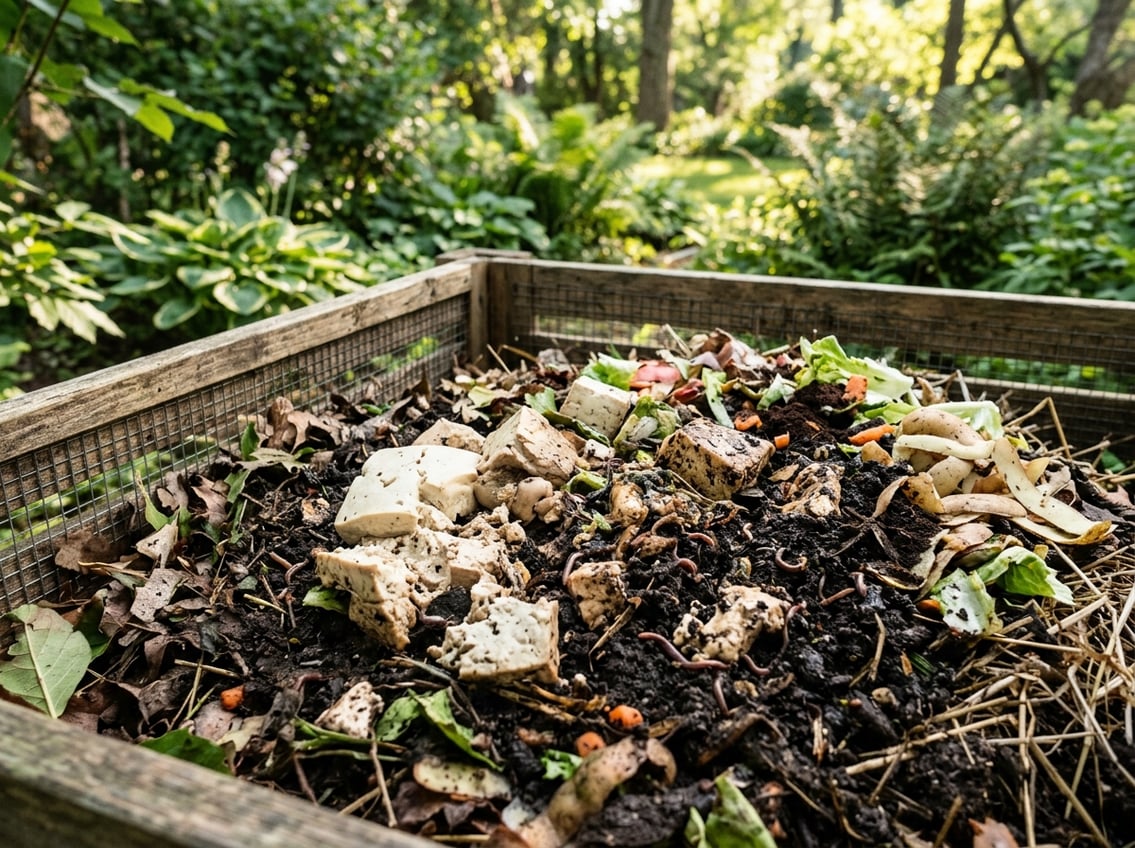
Yes, you can compost tofu. This soy-based food is organic and breaks down in your compost pile.
Tofu counts as a green material and adds nitrogen to your compost. Just remember, tofu can attract pests, so bury it deep and keep your bin covered.
Because tofu has protein and fat, it takes a little longer to decompose than, say, fruit peels. For best results, mix one part green materials with three parts brown materials.
Why Leftover Tofu Deserves a Place in Your Quick Compost Bin
You might pause before tossing tofu in your compost bins. But honestly, this plant-based protein brings some real perks to sustainable living.
When you send tofu to the landfill, it creates methane—a greenhouse gas way more potent than carbon dioxide. Your tofu compost provides valuable nitrogen, about 8% of its weight, which helps your pile break down faster.
Tofu also contains calcium and magnesium, so your finished compost gets a mineral boost. If you manage your pile right, tofu breaks down in 3-6 weeks.
The average American household wastes 32% of purchased food, which is kind of wild. Composting tofu scraps cuts your waste and gives your garden nutrients.
Worried about smells or pests? Good technique keeps those problems in check.
Quick Reference Guide: Tofu Composting Essentials
| Material Aspect | Details |
|---|---|
| Composition | 8-10% protein, 70-85% water |
| Composting Value | Excellent nitrogen source |
| Carbon Ratio | 3:1 (3 parts carbon materials to 1 part tofu) |
| Decomposition Time | 3-4 weeks (average) |
| Key Benefits | Adds nitrogen, calcium, iron, and trace minerals |
| Potential Challenges | Odor if improperly managed, possible pest attraction |
When you add tofu to your compost pile, you’re boosting it with a nitrogen-rich material. Mix three parts carbon materials with one part tofu to keep things balanced.
The high water content in tofu helps speed up decomposition and adds minerals to your compost.
Yes, Tofu Is Compostable: 3 Important Considerations
You can compost tofu in your backyard bin. Tofu breaks down in 3-4 weeks in an active pile, which is pretty quick for a protein.
Three key factors for success:
- Proper burial technique – Bury tofu at least 10 inches deep to avoid odors and keep pests away.
- Balanced carbon materials – Add about 3 cups of brown stuff (leaves, cardboard) for every cup of tofu.
- Adequate aeration – Turn your pile weekly after adding tofu. This helps it break down faster and keeps smells away.
These tips work best for backyard composters with a bin. Apartment dwellers might want to look into bokashi fermentation instead of traditional composting for tofu.
How Tofu Breaks Down: The Nitrogen Advantage in Fast Composting
Tofu packs about 8-10% protein by weight, much more than most veggie scraps. That lands it firmly in the “green” (nitrogen-rich) compost category.
Green materials like tofu heat up your pile and help things break down quickly. The water content in tofu—85% for silken, 70% for firm—keeps composting microbes happy.
These bacteria need 40-60% moisture to do their thing. When you add tofu the right way, it can raise your pile’s temperature by 5-10°F in just a couple of days.
A compost pile needs to hit 130-150°F to break stuff down fast. Tofu is a great addition because its nitrogen and moisture team up to create this heat and speed up decomposition.
5 Best Practices for Quick Tofu Composting Success
Composting tofu takes a few extra steps, but it’s worth it. Here’s what works best:
Chop tofu into 1-inch cubes before tossing it in. Smaller pieces break down way faster.
Bury tofu 10-12 inches deep. Surround it with plenty of carbon-rich stuff—dried leaves, shredded newspaper, or cardboard.
Stick to a 3:1 carbon-to-nitrogen ratio. For every cup of tofu, mix in about 3 cups of brown materials.
Limit tofu to about 10% of your total pile. Too much can make things go anaerobic and start to smell.
Turn your pile 3-5 days after adding tofu. It only takes a few minutes and really speeds up the process.
Add tofu only to piles that are already hot—at least 120°F. Active microbes at this temp break down proteins much faster.
Solving Common Tofu Composting Problems
“My compost smells like rotten eggs after adding tofu”
That rotten egg stink means your pile doesn’t have enough air and is going anaerobic. Turn the pile right away to get air back in there.
Add 2-3 cups of dry stuff like shredded leaves for every cup of tofu you used. This balances out the moisture and helps with airflow.
The smell should clear up in 2-3 days after you fix things.
“Animals are digging in my compost since I added tofu”
Tofu can attract pests like rodents and bugs. Bury tofu at least a foot deep instead of leaving it near the top.
Cover it with a solid layer of dried leaves or straw—about 4 inches. If critters keep coming, use a lid or put hardware cloth under your bin.
“White mold is growing on the tofu in my compost”
White mold actually means things are working. That fungus helps break down tofu proteins faster.
If you want to speed things up, just turn your pile to spread the fungi around. The mold will help break down other stuff too.
“Tofu isn’t breaking down after two weeks”
Check if your pile feels like a wrung-out sponge. Too dry? Add water.
If it’s not heating up (should be at least 120°F), add some grass clippings or other nitrogen-rich scraps. Make sure your pile is at least 3×3×3 feet for enough heat.
Different Tofu Types: Which Compost Fastest?
Silken tofu breaks down the quickest—just 2-3 weeks—because it’s super moist. Breaking it up into small bits helps even more.
Firm tofu takes 3-4 weeks since it’s drier. Turning your pile more often helps speed things along.
Flavored or marinated tofu also takes about 3-4 weeks. Salt and oil can slow things down a bit, so don’t go overboard.
Fried tofu is the slowpoke at 4-5 weeks. The oil means you’ll need more turning and extra carbon materials.
Organic tofu breaks down at the same rate as regular tofu, but without pesticide residues. That’s a plus if you’re gardening organically.
3 Alternative Methods for Composting Tofu When Space is Limited
1. Bokashi Fermentation (Ready in 2 weeks)
Bokashi uses special microbes to pickle food scraps in an airtight container. You can compost tofu and other proteins that regular bins struggle with.
A bokashi bucket only needs about 2 square feet, so it’s great for apartments. After fermenting, bury the material in soil for two weeks and you’ll have usable compost.
2. Worm Bin Composting (Partial solution)
Vermicomposting can handle small amounts of tofu, but you need to be careful. Freeze, then thaw, and break tofu into tiny pieces before adding.
Keep tofu to no more than 5% of your bin. Always bury it under bedding and only add it once a week to avoid smells.
3. Trench Composting (Direct garden method)
Skip the bin with trench composting. Dig a trench about 12 inches deep between garden rows.
Add tofu pieces, then cover with 8-10 inches of soil. The tofu breaks down in the ground in 3-4 weeks and feeds nearby plants.
What to Do When You Can’t Compost Tofu at Home
If composting at home isn’t doable, there are other ways to handle tofu scraps. Freeze them until you can drop them at a community garden that takes protein waste.
Community composting programs are popping up everywhere and often accept all food waste, tofu included. Check out apps like ShareWaste or CompostNow to find local drop-offs.
Commercial composting services are an option too:
- Services like Compost Cab or Earth Matter pick up food scraps weekly.
- Plans usually cost $20-30 per month.
- These operations handle proteins safely, which home bins sometimes can’t.
How Composted Tofu Benefits Your Garden Plants
Composted tofu gives your pile a nutrient boost. Finished compost will have about 2-3% more nitrogen than veggie-only piles.
You’ll also get more calcium—around 350mg per cup of tofu you started with. There are trace minerals too: iron, manganese, copper.
Plants that love tofu-enriched compost:
- Leafy greens (spinach, kale)
- Brassicas (broccoli, cabbage)
- Corn
Spread your nutrient-rich compost as a half-inch layer around plants. For new plantings, mix 25% compost with 75% soil.
You’ll know your tofu is fully decomposed when you can’t spot any pieces. The compost should look dark brown, crumbly, and have that nice earthy smell.
FAQ: Quick Answers to Common Tofu Composting Questions
How long does it take for tofu to decompose in compost?
Tofu breaks down pretty fast in a well-managed pile. Usually, it’s gone in 3-4 weeks if you turn the pile regularly.
Cutting tofu into 1-inch cubes really helps. The extra surface area lets microbes do their job better.
Will composting tofu attract rats and other pests?
You can avoid pest problems with a few easy steps. Bury tofu 10-12 inches deep and cover it well with dry leaves or shredded paper.
Don’t dump in a huge amount at once. Smaller amounts, mixed in, keep critters away.
Can I compost expired or moldy tofu?
Absolutely—expired or moldy tofu is fine for composting. The mold actually kicks off decomposition by adding helpful microbes.
No need to toss spoiled tofu in the trash. Compost it instead!
Is it better to compost tofu or put it down the garbage disposal?
Composting is way better for the environment. It recycles nutrients right back into your garden.
Garbage disposals use water and send those nutrients to the treatment plant—kind of a waste. Composting tofu adds nitrogen to your pile, which your compost really needs.
Can I compost tofu packaging?
Most tofu packaging is not compostable. Toss plastic containers in the recycling bin.
Some brands use plant-based packaging—check the label for composting info before adding it to your pile.
Frequently Asked Questions
Is tofu safe to add to a home compost pile?
Yep, tofu’s totally fine for your home compost pile. It’s a plant-based protein made from soybeans, so it counts as an organic material.
You can toss in both fresh and leftover tofu scraps. Since it’s all plant-based, tofu breaks down naturally and won’t introduce anything nasty to your compost.
Will tofu attract pests or rodents if composted?
Tofu can attract pests when you add it to your compost pile. Animals love the protein and moisture in tofu—it’s like an open invitation for them.
Try burying tofu deep in the middle of your compost pile. Covering it right away with dry leaves or shredded paper helps keep critters away.
If you’ve got a closed compost bin with a lid, use it. That’ll keep rodents and other curious animals out way better than an open pile ever could.
How should tofu scraps be prepared before adding them to compost?
Chop tofu into small pieces before tossing it in. Smaller bits break down way faster than big chunks—trust me, it makes a difference.
Mix those tofu bits with brown stuff like:
- Dried leaves
- Cardboard pieces
- Shredded paper
- Wood chips
Use more brown material than tofu. That helps balance out all the moisture and nitrogen, so your compost won’t get soggy or start to smell weird.
Can tofu that’s spoiled or moldy go into compost?
Spoiled tofu is compostable and actually breaks down pretty quickly. Moldy tofu works too, no big deal.
Honestly, a little mold just helps the tofu decompose even faster. If it’s already starting to break down in your fridge, it’ll finish the job in your compost bin.
Does composting tofu create odors or slow down decomposition?
Composting tofu can get smelly if you don’t do it right. The protein and moisture sometimes create stinky, low-oxygen spots.
Try these tips:
- Turn your compost pile every so often to get some air in there.
- Mix in plenty of dry, carbon-rich stuff with the tofu.
- Don’t dump in a giant batch of tofu all at once.
- Keep things aerated.
If you manage your pile well, tofu won’t slow down decomposition. When you mix it with other materials, it breaks down at a normal pace.
Is compost made with tofu scraps beneficial for garden soil?
Absolutely! Compost with tofu scraps can do wonders for your garden soil.
Tofu packs a punch of nitrogen, so it really boosts the nutrient content of your compost. That means your plants get more of what they need to thrive.
Here’s what finished compost from tofu scraps brings to the table:
- Nitrogen that fuels plant growth
- Soil that’s easier to work with and holds water better
- Extra organic matter, which those helpful soil microbes love
If you’re wondering about tossing tofu scraps in the compost, they’re a valuable resource when you do it right. The nitrogen from tofu really encourages lush, green growth—especially in leafy plants.