
Introduction
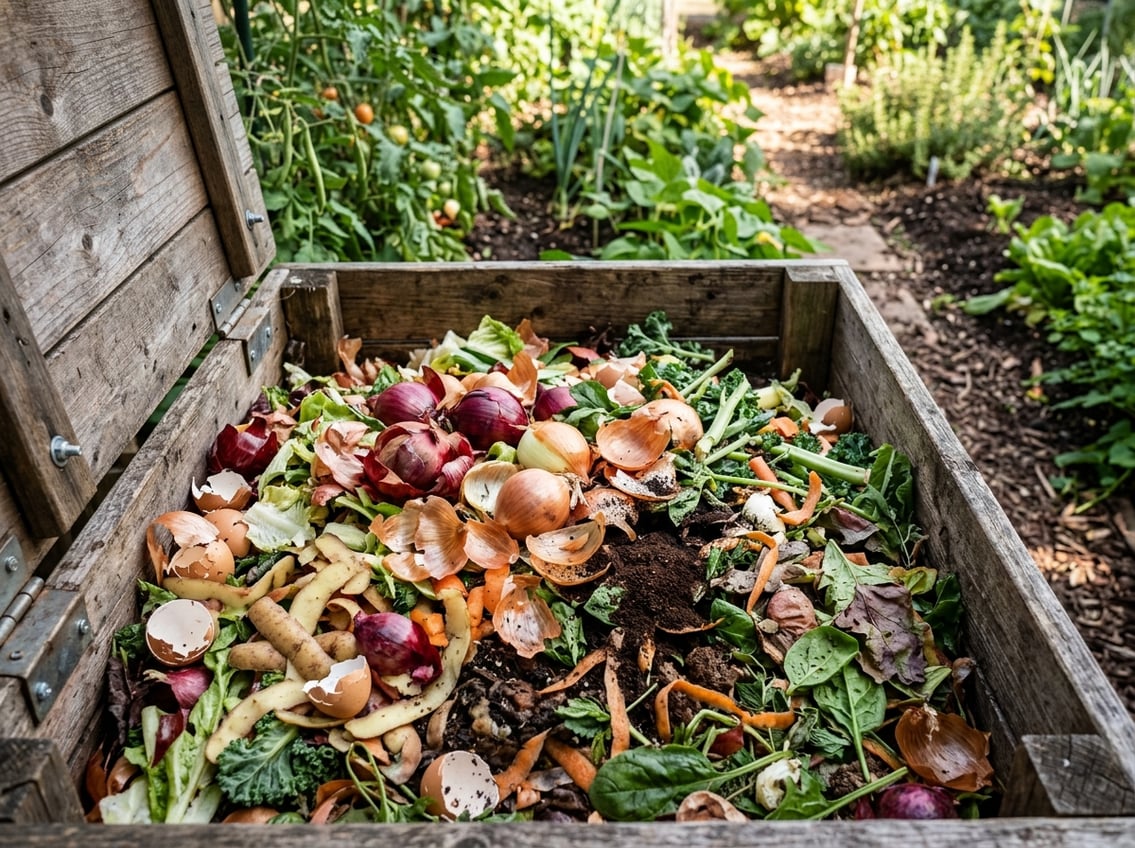
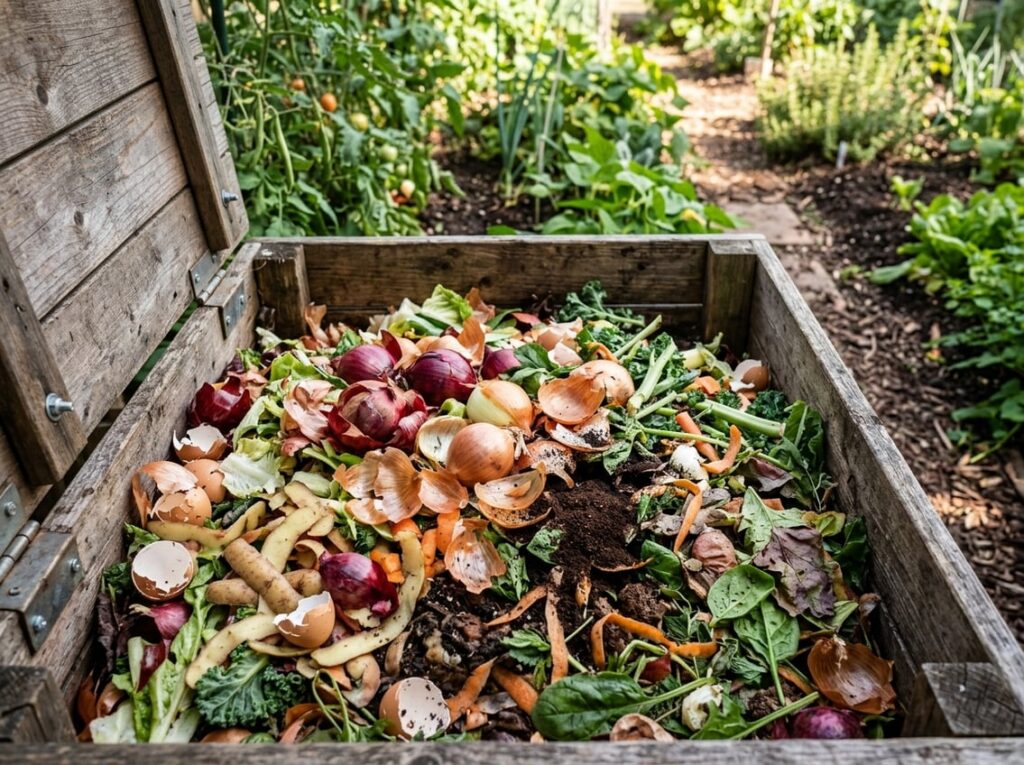
You can absolutely compost onions, no matter what old-school gardening advice says. A lot of people avoid composting onions because they’re worried about bad smells, pests, or slowing down their compost.
Those worries aren’t totally off-base, but onions don’t need to go straight to the trash. Every part of the onion—peels, skins, tops, roots, even moldy bulbs—will break down in compost.
The trick is knowing how to handle them.
What makes onions different from other kitchen scraps?
Onions have sulfur compounds that give them their famous smell. They’re also a bit antimicrobial, which can slow things down in some compost setups.
If you compost onions with the right method, those issues are easy to handle. The benefits are pretty great:
- Less food waste in landfills
- More nitrogen-rich material for your compost
- Nutrient-dense soil for your garden
- Chance of regrowing onions from scraps
How you compost matters more than the onions themselves. Hot, cold, and trench composting all work a bit differently.
One heads-up: skip onions in worm bins. Worms don’t love those compounds.
5 Onion Composting Myths vs. The Surprising Facts
Myth #1: Onions take forever to break down
People say onion skins just sit there for months. Actually, if you chop them up and keep your pile moist and warm, onions break down in 2-4 weeks.
Myth #2: Onions will make your compost smell terrible
Fresh onion scraps do smell strong. But if you add enough carbon stuff—like dry leaves or paper—the odor fades fast. With good composting habits, you won’t have to worry about a stinky pile.
Myth #3: Onions kill beneficial worms
In tiny worm bins, concentrated onion oils can bother worms. But if you mix onions with plenty of other materials, they’re fine. Even commercial worm farms handle onion waste without much fuss.
Myth #4: Onions attract pests and rodents
Any food waste can bring pests if you don’t manage it right. The solution isn’t to skip onions—just bury scraps under carbon materials or use a closed bin. Composting onions works when you use the right approach.
Myth #5: Onions make compost too acidic
Onions are a little acidic, sure. But in a mixed pile, they don’t really change the pH. Finished compost almost always ends up neutral.
Why Your Kitchen’s Onion Waste Deserves Composting
Most households toss out 5-7 pounds of onion waste a year. That’s a lot of nutrients going to waste.
Your onion scraps are loaded with good stuff:
- Potassium for flowering and fruiting
- Calcium for strong cell walls and better soil
- Sulfur for protein and enzymes
- Trace minerals like iron, manganese, and zinc
When onion waste hits a landfill, it breaks down without oxygen and produces methane. That’s a greenhouse gas way worse than carbon dioxide. Composting onions helps cut down on that.
Backyard composting with onions can lower your fertilizer bills by up to 30%. Sulfur from onions feeds your soil and even helps repel some pests naturally.
Understanding Onion Decomposition: The 30-Day Breakdown
The Chemical Process
As soon as you toss onions into your compost, microbes get to work breaking down their cell walls. That releases those eye-watering sulfur compounds.
Bacteria slowly turn these sulfur compounds into simpler stuff. Decomposition frees up nutrients plants crave—nitrogen, potassium, phosphorus.
pH Considerations
Fresh onions are a bit acidic, usually between 5.3 and 5.8 pH. But your compost pile, full of all sorts of scraps, balances it out fast.
Finished compost usually lands between 6.5 and 7.5 pH. That happens no matter what you add.
Temperature Effects
Temperature really matters here. Cold piles under 90°F take 3-6 months to break down onions.
Hot compost piles—120 to 140°F—work way faster. Hot composting onions can finish the job in just 2-4 weeks.
Visual Timeline
Days 1-3: Onion scraps still look like themselves, but start to darken.
Days 4-7: The strong smell fades as things break down.
Days 8-14: Pieces get mushy and lose color in a hot pile.
Days 15-21: It’s tough to tell what used to be onion.
Days 22-30: Onions are fully mixed into your compost.
Hot Composting Onions: The 14-Day Fast-Track Method
Hot composting is the fastest way to process onion waste. You can break it down in as little as two weeks if you keep your pile between 135-150°F.
This method is perfect for anyone who wants to compost onions quickly. You’ll need a decent-sized bin or pile, but the payoff is worth it.
6-Step Process for Hot Composting Onions
Here’s what to do:
-
Chop onion scraps: Cut or shred them into bits no bigger than an inch. The more surface area, the better.
-
Layer materials: Start with 4-6 inches of dry carbon stuff (leaves, paper, cardboard). Sprinkle on a thin layer of onion scraps, then cover with 2-3 more inches of carbon.
-
Get moisture right: The pile should feel like a wrung-out sponge—damp, not soggy. Too dry? Things slow down. Too wet? You’ll get smells.
-
Check temperature: Use a compost thermometer. Aim for 135-150°F. Below 120°F, things stall. Above 160°F, your good microbes start dying.
-
Turn the pile: Once it hits 140-150°F (usually after a few days), turn it to add oxygen and mix things up. This keeps temps high and breakdown even.
-
Look for finished compost: After 14 days of heat and turning, onion scraps should disappear. The compost will be dark, crumbly, and smell earthy.
Perfect Balance
Aim for a carbon-to-nitrogen ratio of about 25:1 when adding onions. In practice, that’s one part onion scraps to three parts carbon-rich stuff by volume.
Dried leaves, shredded paper, or cardboard work great for this. It keeps your compost bin humming and odors low.
Troubleshooting
“My compost smells like rotten eggs”: That’s a sign it’s gone anaerobic. Turn the pile and add more carbon.
“The pile isn’t heating up”: Try adding more green stuff (kitchen scraps, grass) or check the moisture.
“The onion smell is overwhelming”: Add more carbon and bury the scraps deeper.
Trench Composting Onions: The No-Smell, No-Turning Solution
Trench composting is a super simple, low-maintenance way to handle onion scraps. Just dig a hole, bury the scraps, and let the soil microbes do their thing.
How to Trench Compost Onions
Trench composting is easy:
- Dig a trench 8-12 inches deep, either between garden rows or in a bare patch.
- Toss in a 2-3 inch layer of onion scraps.
- Cover completely with soil and make a little mound for settling.
- Mark the spot so you remember where it is.
- Wait 4-8 weeks before planting there.
Ideal Locations
Best spots for trench composting:
- Between rows (at least a foot from plant roots)
- Future planting beds
- Around trees (outside the drip line)
- Along fences if you don’t want a visible pile
Plants That Thrive Over Decomposed Onion Trenches
Once the onions break down, the soil’s awesome for tomatoes, peppers, and eggplants. Brassicas—like cabbage and broccoli—love it. Squash, cucumbers, root veggies, and leafy greens all do well here too.
Seasonal Timing
If you want to plant in spring, start trench composting in late fall or winter. The scraps break down slowly in cold weather. In warm areas, 4-6 weeks is usually enough.
Bokashi for Onion Scraps: The Apartment Dweller’s Solution
Why Bokashi Works for Onions
Onion scraps can be a pain in regular compost because of the smell. Bokashi composting uses fermentation instead of traditional breakdown, so those sulfur smells don’t fill your kitchen.
Bokashi bran is full of good microbes that break down your onion scraps without oxygen. That means no stinky air, even in a tiny apartment. Plus, it keeps more nutrients in your finished product.
5-Minute Bokashi Setup for Under $30
Starting your bokashi system is cheap and quick:
- Two 5-gallon buckets with lids
- One bucket with a spigot or small hole
- A screen or colander for the bottom
- Bokashi bran (with microbes)
Put the screen in the drainage bucket and nest it in the second bucket to catch liquid. Add onion scraps and other food waste in layers, sprinkling bokashi bran over each layer.
Managing the 2-Week Process
Add your onion peels and kitchen scraps daily. Sprinkle bokashi bran every time you add more.
Press everything down to squeeze out air pockets. Keep the lid sealed tight when you’re not adding scraps.
Drain the liquid every few days—you can dilute it for plant food.
When the bucket’s full, close it up and let it ferment for two weeks. That’s it!
Transitioning Bokashi to Soil
Your fermented onion scraps still aren’t finished compost. You need to process the pre-compost material further before plants can actually use it.
Options for finishing your bokashi:
| Method | Time Required | Best For |
|---|---|---|
| Bury in garden soil 8-12 inches deep | 2-4 weeks | Outdoor access |
| Mix with existing compost at 1:10 ratio | 3-4 weeks | Balcony composters |
| Add small amounts to worm bin | 4-6 weeks | Indoor vermicomposting |
| Donate to community garden | Immediate | No outdoor space |
Just pick the method that matches your living situation. No outdoor access? Community gardens often accept bokashi donations from apartment folks.
How to Prevent the 3 Biggest Problems While Composting Onions
Problem #1: Unpleasant Sulfur Odors
You can control bad smells by mixing onion waste with carbon-rich stuff. Aim for a 3:1 ratio of carbon materials to onion scraps by volume.
Best carbon materials to use:
- Shredded cardboard (egg cartons are awesome)
- Dry autumn leaves
- Sawdust or wood chips (make sure they’re untreated)
- Shredded newspaper
- Straw or hay
Bury your onion waste in the center of the compost pile. This really cuts down on odor issues.
Problem #2: Pest Attraction
Keep pests away from your compost pile by burying onion scraps at least 6 inches deep.
Effective deterrent strategies:
- Use enclosed composting systems if you can
- Add a layer of dry leaves or finished compost over new scraps
- Turn the pile often to help it break down faster
- Toss some hot pepper flakes around the pile as a natural pest deterrent
Problem #3: PH Imbalance
Onions can be a bit acidic, which might mess with your compost pH if you add too many. Test your compost pH now and then. The sweet spot is 6.0-7.5.
If things get too acidic, add crushed eggshells or a little garden lime. Keep your onion scraps balanced with other materials and make sure the pile isn’t too wet or too dry.
When to Avoid Composting Onions
You can compost most onion scraps, but sometimes it’s better to skip them. If onions have been treated with herbicides or pesticides, keep them out—they can harm your compost. Diseased onions should go in the trash so you don’t spread problems through your pile.
Don’t dump a whole bunch of onions into a small compost bin all at once. If you use a worm bin, add onions slowly so you don’t overwhelm the worms.
Onions to Avoid:
- Treated with persistent chemicals
- Showing white rot or serious disease
- Large quantities for small bins
- Moldy onions: These are fine if your bin stays dry and well-aerated
Quick Guide: Composting Different Onion Types
You can toss all kinds of onions into your compost pile and get good results. Green onions and scallions break down the quickest since they’re full of water.
Their hollow stems collapse fast, and both the green tops and white roots rot away in about 7-10 days if you use hot composting.
Red, yellow, and white onions break down at the same speed if you chop them up. The color doesn’t matter—size does. Chopped onions disappear way faster than whole onions.
Moldy onions? Go ahead and compost them. The mold actually gets the breakdown going. If your onions are diseased, use hot composting at 140°F for at least 3 days to kill off the bad stuff.
Different onion parts decompose at different rates:
- Onion flesh – 1-2 weeks in hot compost
- Roots – 2-3 weeks
- Onion peels and skins – 3-4 weeks (sometimes longer)
When you compost onion peelings or onion skins, chop them up to help them break down faster.
Beyond Composting: 4 Creative Uses for Onion Waste
Regrow Green Onions in 7-10 Days
You can turn leftover onion scraps into fresh green onions right on your windowsill. Just save the white root ends with about an inch of onion attached and put them in a shallow dish with half an inch of water.
Set the dish in a sunny window and change the water every day or two. Harvest the new green shoots when they hit about 4-6 inches tall. You can do this a couple of times before you need fresh scraps.
Natural Fabric Dyes from Onion Skins
Onion skins make surprisingly beautiful, colorfast dyes for natural fabrics. Yellow onion skins create golden yellow to deep amber shades, while red onion skins give rosy browns or greenish tans.
Simmer the skins in water for 30-60 minutes, then strain out the solids. Soak cotton, wool, or silk in the dye bath for rich, earthy tones.
Onion Tea Pest Deterrent Spray
You can make a handy pest spray by soaking 2 cups of onion skins in 4 cups of hot water overnight. Strain, add a tablespoon of mild dish soap, and pour it into a spray bottle.
Spray it on plants with aphids, spider mites, or whiteflies. Reapply weekly or after rain for best results.
Onion Skins as Garden Mulch
Dried onion skins work well as mulch for acid-loving plants like blueberries and azaleas. They break down slowly and release nutrients while keeping some pests at bay. Spread a 1-inch layer around your plants, but don’t let it touch the stems.
Frequently Asked Questions About Composting Onions
Can onion peels go in compost or are they too tough to break down?
Onion peels break down in compost, though they take longer than the soft inner parts. In a hot compost system, they’ll be gone in 3-4 weeks. Shred or tear the peels into small pieces if you want them to disappear faster.
Will composting onions attract rats to my yard or garden?
If you manage your compost right, onions won’t attract rats any more than other food scraps. Bury onion bits deep in the pile to keep smells down. Enclosed bins or trench composting also help keep pests away.
How long do onions take to break down completely in compost?
It depends on your composting method:
- Hot composting (135-150°F): 2-4 weeks for chopped onions
- Cold composting: 3-6 months
- Trench composting: 4-8 weeks
Temperature and how active your pile is make a big difference.
Can I compost cooked onions or only raw scraps?
You can compost both cooked and raw onions. Cooked ones break down even faster since they’re softer. Just don’t add big piles of oily or salty cooked onions—small amounts are fine.
Is it true that onions kill worms in compost piles?
Not really. It’s mostly a myth. Onion oils can irritate worms if they’re concentrated, but onion scraps mixed into compost don’t harm worm populations. Commercial worm farms handle onion waste all the time.
Do onions make compost too acidic for plants?
Nope. Onions won’t make your compost too acidic. Their slight acidity gets neutralized during decomposition, especially if you mix in a variety of materials. Finished compost almost always ends up near neutral pH.
Frequently Asked Questions
Are onion scraps safe to add to a backyard compost pile?
Yes, onion scraps are totally safe for backyard compost. Onions add organic matter just like any other veggie.
You can compost the whole onion—outer layers, flesh, root ends, all of it. Tons of gardeners do this regularly without any problems.
Chop your onion scraps into smaller bits before tossing them in. They’ll break down faster and mix in better that way.
Do onion peels and skins break down well in compost?
Onion peels and skins do break down, but they’re tougher than the fleshy parts. The papery skins resist decomposition a bit.
To help them break down:
- Cut or shred the peels into smaller bits
- Mix them with other compost materials
- Add plenty of green stuff to balance the browns
- Keep your pile moist and turn it regularly
Eventually, the skins will break down and add nutrients to your compost.
Should raw onion leftovers be composted or avoided?
Raw onion leftovers are great for composting. Composting onions reduces food waste and creates rich organic material for your garden.
Both cooked and raw onions can go into the pile. Raw is even better since there aren’t any added oils or salt.
If you have a worm bin, though, skip the onions. The strong compounds can bother composting worms.
Can onions and garlic be composted together without causing issues?
You can compost onions and garlic together—no problem at all. They’re both alliums and break down in similar ways.
Neither will damage your compost pile. They both have sulfur compounds that smell strong, but those break down just fine.
To make things go smoothly:
- Chop both into smaller pieces
- Mix them with carbon-rich stuff like leaves or shredded paper
- Balance them with other kitchen and yard scraps
- Turn your pile regularly
Will adding onions to compost attract pests or create strong odors?
Onions can create a strong smell at first, but good composting habits keep it under control. The smell comes from sulfur compounds as onions break down.
Oddly enough, onions are less likely to attract pests than some other food scraps. The same compounds that smell strong can actually turn some animals away.
To manage odors and keep pests out:
- Bury onion scraps in the middle of your pile
- Cover them with browns like leaves or sawdust
- Keep your pile moist, but not soggy
- Turn it often to speed things up
- Balance your greens and browns
With a well-tended compost pile, onions shouldn’t cause any big problems.
What composting methods work best for materials that can be slow to break down, like onions?
Hot composting tends to work best for slow-to-break-down stuff like onions. It uses high temperatures (somewhere between 130-160°F) to speed things up and break down tough scraps more quickly.
Hot composting requires:
| Element | Requirement |
|---|---|
| Size | Pile at least 3 feet x 3 feet x 3 feet |
| Green materials | 25-30% of pile (nitrogen-rich) |
| Brown materials | 70-75% of pile (carbon-rich) |
| Moisture | Damp like a wrung-out sponge |
| Turning | Every 3-7 days |
Other methods can work too:
- Trench composting – You just bury onion scraps right in your garden beds. They’ll break down underground, out of sight.
- Bokashi composting – This one uses friendly microbes to ferment onions and kitchen waste before you add it to soil.
- Tumbler composting – Turning a sealed container regularly helps break things down faster and keeps smells in check.
Don’t use vermicomposting (worm composting) for onions. Those strong onion compounds can really hurt—or even kill—your worms.