Can You Compost Sunflower Seeds? Fast Decomposition Guide for Garden Gold
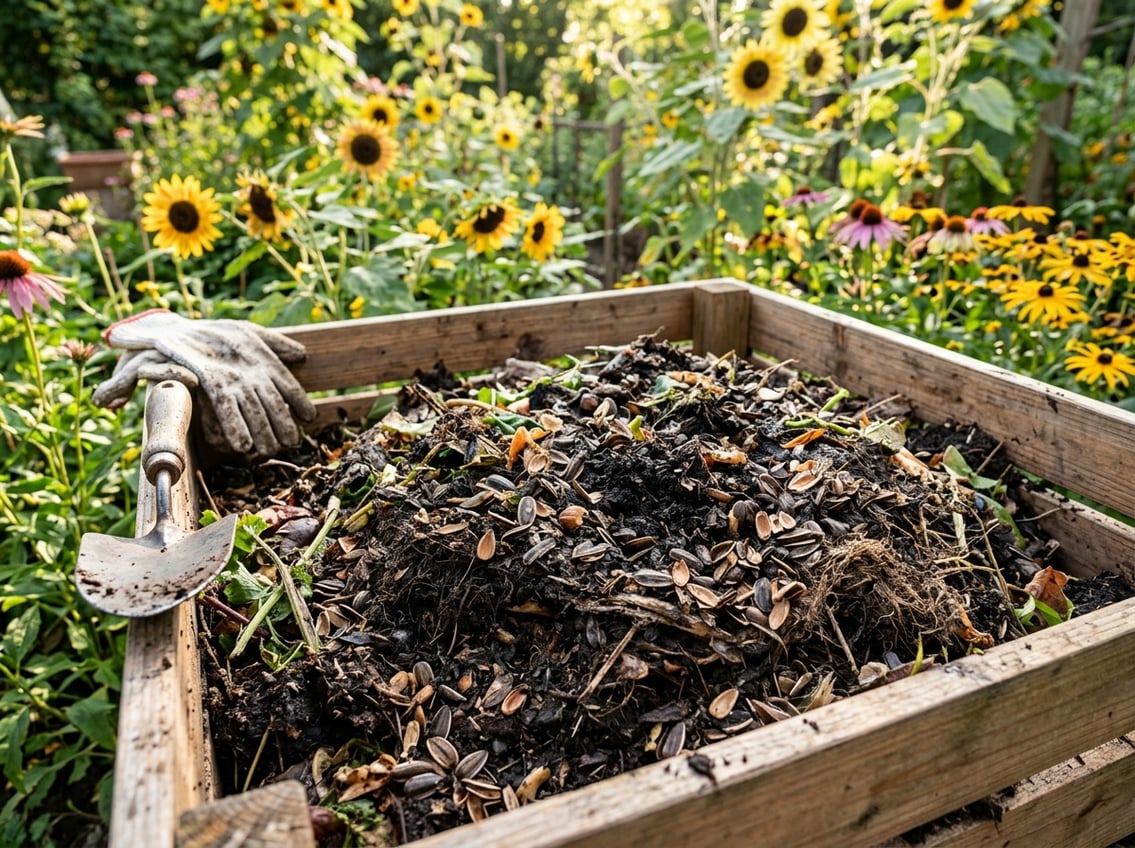
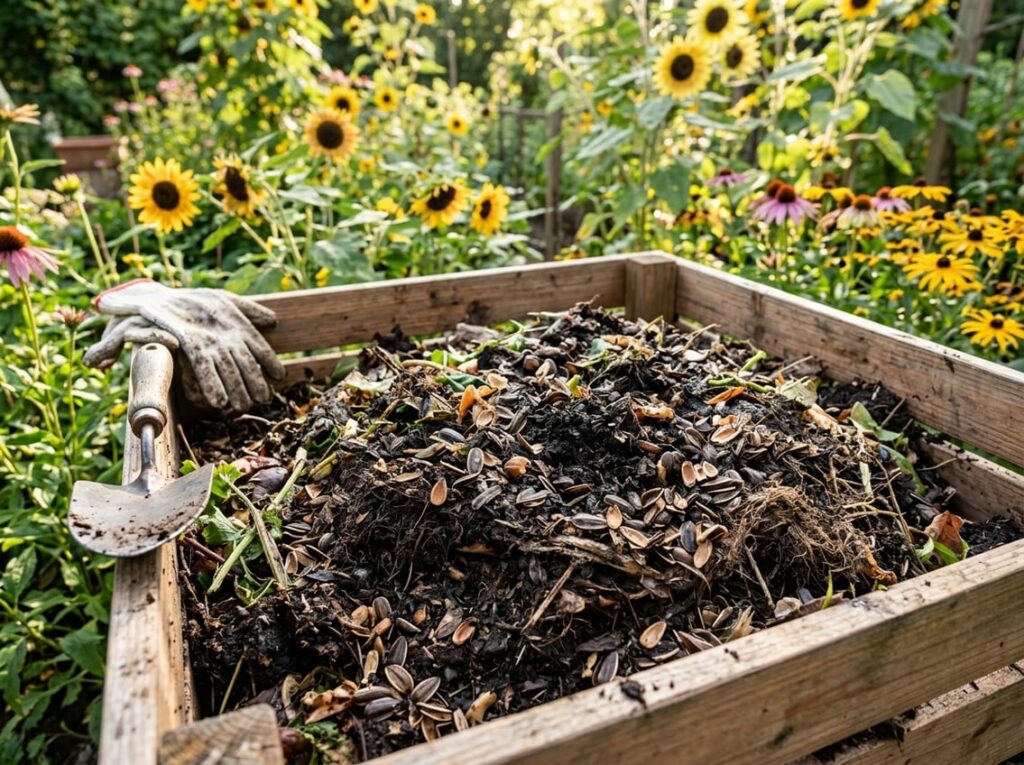
Sunflower seeds are compostable and make valuable additions to your compost pile. You can recycle both the seeds and shells from snacks or bird feeders into nutrient-rich material for your garden.
Crushing or chopping the seeds before tossing them in helps them break down faster. It’s a small step, but it makes a big difference.
Sunflower seeds have a carbon-to-nitrogen ratio of about 10:1, so they’re considered green material that provides nitrogen. This helps balance your compost pile.
If you’re using salted seeds, rinse them first. Excessive salt can harm beneficial microorganisms in your pile, and rinsing adds moisture that helps things decompose.
You can compost:
- Whole sunflower seeds
- Seed shells and hulls
- Sunflower stalks and leaves
- Leftover seeds from bird feeders
Mix sunflower seeds with other compost materials for the best results. Variety’s always a good thing in compost.
The Quick Answer: Yes, Sunflower Seeds Can Be Composted (Within 3-4 Months)
You can absolutely compost sunflower seeds as green material. Raw seeds usually break down in 2-3 months, while roasted ones need about 3-4 months to fully decompose.
Decomposition Timeline:
- Raw sunflower seeds: 2-3 months
- Roasted sunflower seeds: 3-4 months
- Sunflower shells: 4-6 months
Choose unsalted seeds if you can. If you only have salted, give them a good rinse before tossing them in.
Shells add valuable carbon but need more time to break down. Breaking up seeds and shells can speed up decomposition by almost half.
Quick Reference Guide: Sunflower Seed Composting Essentials
| Material | Carbon Ratio | Decomposition Time | Benefits |
|---|---|---|---|
| Raw Seeds | 20:1 | 2-3 months | High oil content, good nitrogen source |
| Roasted Seeds | 25:1 | 3-4 months | Less likely to sprout, slower breakdown |
| Shells | 30:1 | 4-6 months | Excellent carbon source, improves aeration |
When you add sunflower seeds for compost, a few methods really help.
Key Practices for Adding Seeds:
- Crush seeds before adding to increase surface area
- Limit to about 10% of your total compost volume
- Mix thoroughly with other materials
- Keep moisture consistent—think wrung-out sponge
Breaking up seeds before composting helps prevent sprouting and speeds things up.
Understanding What Makes Sunflower Seeds Compostable (And Why It Matters)
Sunflower seeds break down at different speeds depending on their makeup. The seeds contain 20-40% oils, which give microorganisms energy to work.
These oils also feed fungi that help break down tougher plant materials. The protein content, usually 20-30%, adds valuable nitrogen to your compost.
The outer shells are a bit stubborn. They’re about 45% cellulose, so they take longer to decompose than something soft like fruit scraps.
While kitchen scraps disappear in a couple weeks, sunflower seeds need a bit more time. When everything breaks down together, you get nutrient-rich compost that really changes your soil.
This finished compost improves soil structure and can boost water retention by up to 30%. Your plants will thank you with better drainage and lighter soil.
Raw vs. Roasted Seeds: Which Compost Faster? (And Why It Matters)
Heat treatment makes a difference in how quickly sunflower seeds break down. Raw seeds decompose faster, usually within 2-3 months, while roasted ones take a month or so longer.
Raw seeds have active enzymes that speed up breakdown by a couple weeks. Roasting denatures proteins and changes the oils, which slows things down for the microbes.
Key differences:
- Raw seeds break down faster
- Raw seeds add more active biological compounds
- Roasted seeds won’t sprout or create volunteer plants
- Roasted seeds attract fewer pests
If you’re worried about surprise sunflowers popping up, roasted seeds are safer. You can test seed viability by putting 10 seeds on a damp paper towel for a week—see what happens.
How to Safely Compost Salted Sunflower Seeds (Without Harming Your Garden)
You can compost salted sunflower seeds, but you need to handle the salt. Salt concentrations above 0.5% can mess with the good microbes in your pile.
Keep your compost healthy with these tips:
- Keep salted seeds under 5% of your total compost volume
- Soak seeds for about 10 minutes before adding
- Drain and rinse twice to get rid of excess salt
- Watch for white crust on your compost as a warning sign
Salt doesn’t break down during composting. You can only dilute or rinse it away. If you notice slow decomposition, white crusting, or leaf burn on plants where you used the compost, you probably added too much salt.
Rinsing flavored seeds well also removes sugar and artificial stuff that can slow down decomposition. This simple step protects your soil and lets you recycle snack waste.
Managing Oil Content: 3 Ways to Balance Your Compost Pile
Sunflower seeds have a lot of oil—20-40%, actually. Too much oil in one spot can create greasy, water-repellent patches that slow things down.
Three ways to keep your compost balanced:
-
Mix with absorbent materials—Add about 2 cups of dry leaves or newspaper for every cup of seeds. This soaks up extra oil and keeps clumps from forming.
-
Maintain proper ratios—Stick to a 3:1 carbon-to-nitrogen ratio when adding oily seeds. It’s not an exact science, but it really helps.
-
Turn weekly—Regular turning gets oxygen in there and breaks up oil pockets.
Layer seeds between shredded cardboard or leaves to create a sort of “oil sandwich.” This spreads out the oils and gives microbes better access. Eventually, the oils turn into compounds that make your soil better.
5 Steps to Properly Compost Sunflower Seeds (Ready in 2-3 Months)
Step 1: Crush the Seeds and Shells
Break down sunflower seeds and shells into smaller pieces. This increases surface area and speeds up breakdown by almost half.
Step 2: Pre-Soak for 24 Hours
Soak your crushed seeds in water for a full day. This kickstarts the decomposition process.
Step 3: Mix with Brown Materials
Combine soaked seeds with leaves, paper, or cardboard at a 3:1 ratio. This keeps your compost balanced.
Step 4: Bury Deep in Your Pile
Put the seed mixture 6-8 inches deep in your compost. This helps prevent sprouting and keeps things breaking down well.
Step 5: Turn Weekly
Flip your pile once a week. This keeps air and moisture levels just right—your compost should feel like a wrung-out sponge.
Quick-Composting Sunflower Shells: Breaking Down the Toughest Part
Sunflower shells are tough—they can take 4-6 months to decompose because of their lignin and cellulose fibers. You can speed this up by 30-50% with a little prep.
Fastest Shell Prep Methods:
- Crush shells with a coffee grinder before adding
- Put sunflower hulls in a cloth bag and smash with a rolling pin
- Pre-soak crushed shells overnight to boost moisture
Mixing sunflower hulls with organic matter really helps. Try combining crushed shells with used coffee grounds—breakdown time can get cut in half.
You’ll know the shells are done when they turn dark brown and crumble easily. Breaking down shells before composting makes a big difference.
Beyond Composting: 4 Alternative Uses for Sunflower Seed Waste
If composting isn’t your thing, sunflower shells still have a bunch of uses. You can spread them as mulch with a 1-2 inch layer around plants—it’ll last up to a year.
The shells work for garden paths too, suppressing weeds while they slowly break down. For containers, add a 1-inch layer of shells to the bottom to help drainage.
You can collect shells in paper egg cartons with wax to make fire starters. They light quickly and work great for camping or backyard fires.
If you keep chickens, the shells make solid bedding material. They absorb moisture and help reduce odor in coops, and as they mix with manure, you get a pre-composted material for your garden.
Another idea—offer unsalted, unroasted seeds to backyard birds. You might notice discarded hulls piling up around feeders, which you can scoop up and use as mulch.
Conclusion: Transform Sunflower Waste into Sustainable Garden Success
Composting sunflower seeds and shells keeps food waste out of landfills, where it’d just create methane. You end up with nutrient-rich compost and don’t spend a dime.
Your soil structure and water retention get a real boost—sometimes up to 30% better. It’s a pretty cool way to complete the gardening cycle, from seed all the way back to soil.
Start small and see how your sunflower waste breaks down. You’ll figure out what works best for your pile as you go.
Composting isn’t just about waste disposal—it’s about building healthy soil and supporting your garden’s ecosystem. You’re part of nature’s cycle, turning trash into garden treasure.
Your plants will reward you with stronger growth, better stress resistance, and more productivity. All from stuff that would otherwise end up in the garbage.
FAQ: Common Questions About Composting Sunflower Seeds
Will sunflower seeds sprout in my compost pile?
Raw seeds might sprout if your compost gets cozy enough for them. You can stop this by crushing the seeds before tossing them in.
If you’re into hot composting, let your pile heat up to at least 140°F—germination just won’t happen at that temp.
How long does it take for sunflower seed shells to decompose completely?
Whole shells usually need 4-6 months to break down. Crush them first and you’ll cut that time down to 2-3 months.
Can I compost flavored or seasoned sunflower seeds?
You can, but rinse them off first. Salt, sugar, and weird artificial flavors don’t do your compost microbes any favors.
What’s the maximum amount of sunflower seeds I should add to my compost?
Try to keep sunflower seeds around 10% of your total compost volume. Too many can lead to oily clumps and throw things off balance.
Do sunflower seed shells work in worm composting bins?
They work, but crush them first and don’t go overboard—keep it under 10% of your worm bin. Worms munch on them slowly, so patience is key.
Can I add moldy sunflower seeds to my compost?
Yep, moldy seeds are totally fine. The mold’s already working on breaking them down. Just mix them in well so you don’t get clumps.
Frequently Asked Questions
Are sunflower seed shells safe to add to a backyard compost pile?
Yes, you can add sunflower seed shells to your backyard compost pile. They’re organic and will break down, adding nutrients to your finished compost.
The shells bring carbon to the mix, so they count as a brown or dry material. Toss them in with dried leaves, paper, or cardboard.
No worries about toxins—sunflower seed shells are safe for your compost and your plants.
Do sunflower seed hulls break down quickly, or do they slow composting?
Sunflower seed hulls take their time compared to soft stuff like food scraps or grass. The tough outer layer just doesn’t break down fast.
Whole shells can take months to disappear in your pile. They’re kind of like wood chips in that way.
How fast they break down depends on your compost setup. Warm temps, enough water, and a little turning now and then help a lot.
Should sunflower seed shells be crushed or shredded before composting?
Crushing sunflower seed shells before composting really helps. Smaller pieces give microbes more to work on.
You can crush them by stepping on them in a bag, using a rolling pin, or even tossing them in a food processor. A hammer works if you’re feeling old-school.
Whole shells will still break down, but you’ll wait longer. Breaking them up helps them blend in better with the rest of your pile.
Can sunflower seed shells be composted directly in garden beds as mulch?
You can use sunflower seed shells as mulch in your garden beds, but they work better if you partially compost them first. Fresh shells just take forever and might hog nitrogen for a while.
If you go for it, spread them thinly around your plants. Don’t pile them up too much or you’ll block water from getting to the soil.
Partially composted shells make nicer mulch. They keep breaking down and add organic matter to your soil as they go.
Will sunflower seed shells attract pests or cause odor issues in compost?
Sunflower seed shells don’t usually cause any odor issues. They’re dry and don’t really smell while decomposing.
If there are still seeds attached, you might get some visitors—birds, squirrels, or even a curious rodent or two.
To keep pests away, remove leftover seeds before composting the shells. Bury the shells in the center of your pile and cover them with other materials.
Keeping a good mix of brown and green materials helps too.
What materials should never be added to a home compost bin?
You know, there are a few things you should just keep out of your compost bin:
Meat, fish, and bones – Tossing these in? Not a great idea. They smell pretty bad as they break down, and you’ll probably end up with raccoons or other critters digging around.
Dairy products – Cheese, milk, butter—basically anything creamy—will stink up your pile and invite animals you really don’t want.
Pet waste – Dog and cat poop might seem natural, but it can carry bacteria that stick around, even after composting. Just not worth the risk.
Diseased plants – If your plants were sick, don’t compost them. Otherwise, you might accidentally spread those diseases right back into your garden.
Treated wood or sawdust – Pressure-treated lumber has chemicals you don’t want in your veggies or flowers. Best to avoid any sawdust from treated wood, too.
Glossy or coated paper – Magazines and colored paper often have weird inks and coatings. They don’t break down well, and honestly, who knows what’s in them?
Cooking oils and grease – Pouring these in creates a mess. They make the compost clump up and keep water out, plus they attract pests.
Coal or charcoal ash – These ashes can contain stuff that’s just plain bad for plants. Better to leave them out altogether.