The Packaging Waste Problem: Why Composting Packing Paper Matters
Online shopping creates a real waste challenge at home. The average American household gets about 21 packages a year, which adds up to over 30 pounds of packaging waste.
Roughly 40% of this material lands in landfills, even though there are better options out there. You can actually turn this waste into something your garden loves.
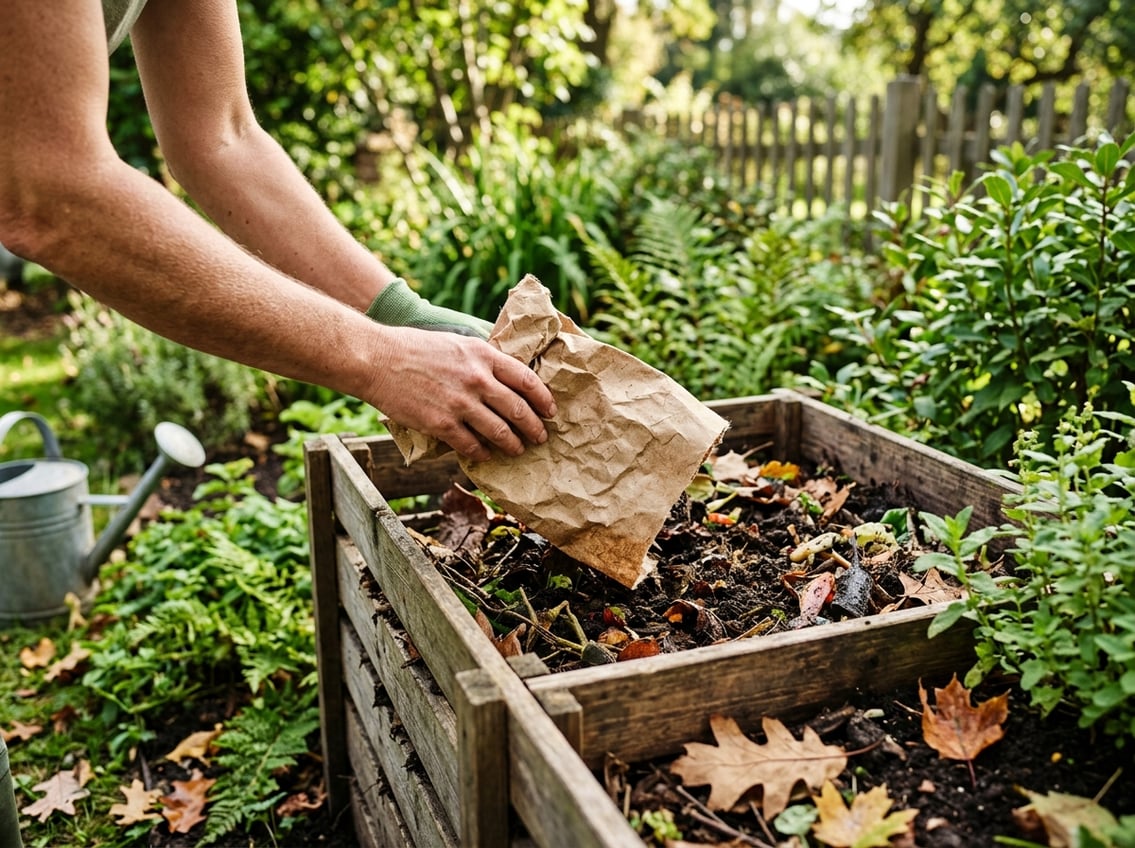
Packing paper can be composted and turned into nutrient-rich soil instead of just filling up your trash bin. This small change really adds up for the environment.
- Diverting 5 pounds of paper from landfills can shrink your carbon footprint by about 15%.
- Getting started doesn’t take long—sometimes just a couple of weeks.
You don’t need a huge backyard to compost packing paper. Brown packing paper is an important “brown” material that gives your compost bin the carbon it needs.
The waste problem keeps growing as online shopping gets more popular. Taking a few simple steps with your packaging waste helps cut down on landfill contributions and builds healthier soil for your plants.
Quick Reference Guide: Composting Packing Materials
You can compost quite a few packing materials, but it’s important to know which ones are safe. Brown kraft paper breaks down fast—just 2-4 weeks if you shred it up. Plain, undyed tissue paper decomposes even quicker, sometimes in just a week.
Compostable Options:
- Kraft paper (brown shipping paper)
- Undyed tissue paper
- Newsprint (go easy—there might be trace metals)
- Starch packing peanuts (dissolve these in water first)
Not Compostable:
- Waxed paper (recycle instead)
- Glossy paper with plastic coatings
- Paper with plastic tape attached
Before tossing any paper into your compost, peel off all plastic tape and non-paper bits. Shredding the paper speeds things up a lot.
All these are high-carbon “brown” materials, so make sure you balance them with some nitrogen-rich “green” stuff like food scraps.
4 Types of Packing Paper: What Can You Actually Compost?
Kraft Paper (Brown Shipping Paper)
This sturdy brown paper is probably the best for composting. Shred it up, and it disappears in about 2-4 weeks.
Kraft paper is loaded with carbon, which helps balance all those kitchen scraps in your pile. You can compost all your kraft shipping paper without stressing.
Its natural brown color means there are no weird additives. Shredding it into small bits makes it break down even faster and helps soak up extra moisture.
Tissue Paper
You can compost tissue paper as long as it’s plain and undyed. This stuff breaks down in just 1-3 weeks and works great in compost bins.
Skip tissue paper with metallic finishes, heavy dyes, or shiny coatings. Double-check before adding it to your pile.
Thinner tissue paper vanishes quicker than kraft paper, but it doesn’t add as much carbon.
Newsprint/Newspaper
Newsprint is compostable and works well as bedding in worm bins. Most modern newspapers use soy-based inks that are safe for composting.
Use newsprint in moderation. Some specialty publications might have inks that aren’t so friendly.
If you’re worried about the ink, recycling is probably safer. Shredding newspaper helps it disappear faster in the pile.
Specialized Papers
Glossy inserts, coated papers, and fancy wraps often have plastic or chemical treatments. These don’t compost well and might mess up your pile.
Recycle anything that feels slick, shiny, or unusually smooth. Those coatings just aren’t compost-friendly.
Quick Identification Test: The “Tear and Soak” Method
Want to know if your packing paper is compostable? Try this:
- Tear off a small piece.
- Drop it in a cup of water.
- Stir for about 30 seconds.
- Watch what happens.
If the paper softens and starts breaking apart, it’s good for compost. If it stays tough or feels waxy, it’s probably not.
Is Your Packing Paper Compost-Safe? 3 Essential Tests
The Treatment Test
Some packing papers have sneaky coatings that make them tough to compost. You can check with a quick wet test.
Soak the paper and try to tear it. If it rips easily, it’s probably untreated. If it resists or feels slick, it’s likely got wax or plastic that won’t break down.
The Color Question
Some colored papers are fine to compost, but others have nasty dyes. Natural brown, beige, and gray papers are usually safe.
Bright, fluorescent colors often have synthetic dyes you want to avoid. Most modern black inks are soy-based and safe.
If the color bleeds when wet, play it safe and recycle instead.
The Contamination Check
Even compostable paper can be ruined by what’s stuck to it. Inspect your packing paper before tossing it in.
Peel off all plastic tape, staples, and labels. Watch for oil stains or chemical residues. If a section looks iffy, just tear it off and toss it in the trash.
DIY Compostability Test: The Mason Jar Method
Want a more thorough test? Try this:
- Shred a bit of your packing paper.
- Add it to a mason jar with some finished compost and a sprinkle of soil.
- Moisten (don’t soak).
- Loosely close the jar and put it somewhere warm.
- Check after a week or so—if the paper is breaking down, you’re good.
Common Misconceptions
People often think shiny paper always has plastic, but some just use clay coatings and are fine to compost. On the flip side, some matte papers have hidden plastics.
When in doubt, do a quick test rather than guessing by looks alone. It really helps.
How to Compost Packing Paper: 5-Step Process for Faster Decomposition
Preparation Technique: The “Soak and Shred” Method
Getting paper ready for composting makes a huge difference. Tear or cut your packing paper into strips about 1-2 inches wide.
You can use scissors or just rip it by hand. Next, soak the strips for 15-30 minutes.
If you have a shredder, run the paper through before soaking. After soaking, squeeze out the extra water but leave the paper damp.
This trick can cut decomposition time in half compared to tossing in big sheets. Smaller, damp pieces are just easier for microbes to munch on.
Balancing Your Compost
Packing paper is a carbon-rich material. You need to balance it with nitrogen-rich stuff for a happy compost pile.
Shoot for a 30:1 carbon-to-nitrogen ratio. For every 5 gallons of shredded paper, throw in about 1 gallon of kitchen scraps, coffee grounds, or fresh grass clippings.
If you smell ammonia, add more paper. If things are breaking down slowly, add more greens.
Quantity Guidelines
Brown shipping paper is great, but don’t go overboard. Try to keep paper at about 20% of your total compost volume.
Add it gradually and mix it in well. Too much paper at once turns into dense mats that block airflow.
Troubleshooting Wet Paper Mats
If you end up with soggy, clumpy paper mats, break them up with a garden fork. Then try layering like this:
- Coarse browns (sticks or leaves)
- Shredded paper
- Nitrogen-rich stuff
- More coarse browns
This sandwich method keeps things airy and stops clumping.
Small-Space Solution: 5-Gallon Bucket Composting
No yard? No problem. Compost packing paper in a 5-gallon bucket.
Drill 10-15 holes in the bottom for drainage. Add 2 inches of soil, then mix shredded damp paper with kitchen scraps at a 3:1 ratio.
Cover with another inch of soil. Keep it moist and turn weekly.
You’ll have finished compost in 4-6 weeks.
7 Sustainable Alternatives When Packing Paper Isn’t Compostable
Garden Repurposing: Weed Barriers
You can use plain packing paper as a weed barrier in the garden. Water your soil, then lay down 2-3 sheets of paper around your plants (but don’t touch the stems).
Top with 1-2 inches of mulch. By fall, the paper will have broken down and kept weeds at bay.
Seed-Starting Pots
Kraft paper is perfect for making biodegradable seed pots. Fold it up using simple origami methods (there are tons of templates online).
Fill with seed-starting mix and plant your seeds. When the seedlings are ready, plant the whole pot—paper and all—right in the ground.
When Recycling Beats Composting
Papers with plastic coatings or heavy inks are better off in recycling. Add clean, dry paper to your recycling bin.
Check your local rules—some places have different guidelines for mixed materials.
Creative Upcycling: Gift Wrap
Clean packing paper makes awesome gift wrap and saves you money. Iron it on low to smooth out wrinkles.
Decorate with:
- Stamps or markers
- Pressed leaves or flowers
- Twine or ribbon
Household Uses
Keep spare packing paper handy for little jobs around the house. Use it to protect surfaces when painting or to clean windows by crumpling it into balls.
It’s also great for lining pet cages or craft projects with kids.
Community Options
Local groups and small businesses often need clean packing materials. Art teachers and community gardens love getting extra paper for projects or weed control.
Some package-free shops will even take clean materials back.
Storage Solution
Fold and stash clean packing paper in a box in your closet. You’ll have free shipping materials on hand when you need to send a package.
How to Handle Special Packing Materials: Beyond Basic Paper
Can You Compost Glossy Catalogs?
Some modern glossy papers are okay for composting. The trick is figuring out what makes them shiny.
Clay-coated papers tear easily and feel smooth, not plasticky. Compost these in small amounts.
Plastic-coated papers won’t tear when wet. Those belong in the recycling bin.
If you’re unsure, recycling is usually the safer bet.
Colored Packing Paper
Whether you can compost colored paper depends on the dye. Natural vegetable dyes are safe and often found in kraft papers with muted colors.
Look for packaging labeled “vegetable-based inks” or “compostable dyes.” These are fine for your compost pile, just like brown paper bags and cardboard.
Bright or neon colors usually mean synthetic dyes—recycle those instead.
Food-Contaminated Paper
A little food stain won’t ruin your compost. Paper with minor grease from natural foods is usually fine.
Avoid heavily soiled paper or anything that’s touched chemicals. Never compost paper that’s come into contact with raw meat juices—too risky.
Mixed Materials
A lot of packages use mixed materials, so you’ll need to separate them. Peel paper off bubble wrap carefully.
Compost the paper, recycle the bubble wrap. Remove paper labels from plastic envelopes and cut out plastic windows from cardboard before composting.
Compostable Packing Peanuts
You can check your packing peanuts with a quick water test. Drop one into a glass and see what happens.
Starch-based peanuts start dissolving right away. Those are safe for composting.
Styrofoam peanuts just float without changing at all. Take those to a specialty recycling facility.
Creating Your Sustainable Packaging Waste System in 3 Steps
The 10-Minute Sorting Station
Set up three containers near where you usually open your packages: Compostable, Recyclable, and Reusable. Add a smaller container for non-recyclable bits.
Process each container weekly. Compost packing paper and other compostables, take recyclables out, and stash anything reusable.
This keeps everything organized and doesn’t take much time.
Family-Friendly Labels
Make visual guides with pictures of common packaging items so everyone knows what goes where. Use green labels for compost and blue for recycling.
Add a simple decision tree for confusing items. Check your household’s progress once a month to keep folks motivated.
Reducing Incoming Waste
Try to cut down on packaging before it even arrives:
- Amazon: Pick “Frustration-Free Packaging” if you see it.
- Etsy: Message sellers and ask for less or plastic-free packaging.
- Target: Choose “Ship items together” at checkout.
- Walmart: Select “No rush shipping”—usually fewer boxes involved.
- All retailers: Add special packaging requests in the order notes.
Most companies are happy to help if you ask.
The “Packaging Feedback” Email Template
Here’s a template you can send when you get a box full of unnecessary packaging:
“Hello, I recently received order #[number] and appreciated the products. However, I noticed excessive packaging, particularly [describe issue]. As an environmentally conscious consumer, I’d prefer minimal, recyclable packaging in future orders. Do you offer sustainable packaging options? Thank you for considering this feedback.”
Your feedback actually helps companies improve their sustainable packaging practices.
Your 48-Hour Action Plan for That Pile of Packing Paper
Quick-Decision Flowchart
Sort your packing paper fast with a few questions:
- Is it plain brown or white paper without coatings? → Compost
- Minimal printing with soy-based inks? → Compost
- Glossy, plastic-coated, or heavily dyed? → Recycle
- Clean and reusable? → Store for next time
- Contaminated with non-compostables? → Separate if you can, then sort
Environmental Calculator
Composting makes a real difference:
| Action | Environmental Benefit |
|---|---|
| Every pound composted | Prevents 0.5 pounds of CO2 emissions |
| 10 pounds of paper | Feeds about 5 square feet of garden |
| 5 pounds reused | Saves 25 gallons of water |
First Steps: 48-Hour Plan
Today:
- Sort your packaging pile using the flowchart above.
- Shred compostable paper and add to your compost bin or start a collection.
Tomorrow:
- Set up your sorting station with labeled containers.
- Remove any non-compostable stuff from paper you plan to compost.
This weekend:
- Add prepared paper to your compost system.
- Email one company whose packaging could use improvement.
- Show your system to the rest of your household.
FAQ: Common Questions About Composting Packing Paper
Can I compost paper with colored ink printing?
You can compost paper with colored ink in most cases. Modern inks are usually soy-based, so they’re safe for composting.
Avoid papers with metallic inks, super-bright colors, or heavy ink coverage. Stick to less than 30% colored inks in your total pile to play it safe.
How long does kraft packing paper take to break down in my compost bin?
Kraft paper breaks down in 2-4 weeks if you shred it and keep it moist in an active pile. Whole sheets take a lot longer, sometimes 2-3 months.
A few things affect how fast it breaks down:
- Temperature of your pile
- Moisture levels
- Mixing with greens
- Size of the paper pieces
What’s the easiest way to remove tape and staples before composting?
Freeze the paper for half an hour—tape peels off way easier when it’s cold and brittle. For stubborn tape, just tear around it and toss those bits in the trash.
For staples, use a flat-head screwdriver to pry them up. Or just tear around the stapled area and compost the rest.
Is it better to compost or recycle clean packing paper?
Both help the environment, but in different ways. Composting packing paper adds nutrients to your soil and skips the transport step.
Recycling is best for heavily printed papers and keeps the fibers in use. If you garden, composting is great. If not, recycling is excellent. Reusing is even better, honestly.
Will adding packing paper make my compost too dry?
A lot of dry paper can soak up too much moisture. Wet your paper before adding it to the pile.
Balance brown materials like packing paper with green, nitrogen-rich stuff. Check your compost—it should feel like a wrung-out sponge. If it’s too dry, add some water.
Can I put packing paper in my city’s green waste bin?
Rules vary by city. Many programs accept small amounts of plain paper, but there are limits.
Check your local guidelines or call your waste department to be sure.
Does shredding paper really make it compost faster?
Absolutely. Shredding increases the surface area, so moisture and microbes break down the paper quicker.
Shred your paper into strips no wider than half an inch for best results.
Frequently Asked Questions
Is brown kraft packing paper safe to add to a backyard compost bin?
Yes, brown kraft packing paper is safe for backyard composting. It’s made from unbleached wood pulp and doesn’t have weird chemicals or coatings.
Kraft paper breaks down easily and adds carbon to your pile, which helps balance food scraps. Avoid anything with plastic, wax, or metallic finishes—those don’t break down and just make a mess.
Should packing paper be shredded before adding it to compost?
Shred or tear packing paper into smaller pieces before composting. Smaller bits break down faster.
Shredded paper gives microbes more to work with, so things decompose quicker and mix better. Pieces around 1-2 inches are perfect. No need for a shredder—tearing by hand works just fine.
Can paper with ink, stamps, or printed labels be composted safely?
Most modern inks on packing paper are soy- or water-based and fine for composting. Stamps, shipping info, and simple labels usually aren’t a problem.
Skip glossy, heavily colored papers—those might have chemicals you don’t want in your compost.
Safe to compost:
- Black and white printed text
- Basic shipping labels
- Soy-based ink prints
- Simple stamps and barcodes
Avoid composting:
- Heavily dyed or colored paper
- Glossy magazine paper
- Plastic-laminated paper
- Thermal receipts
Is packing paper better composted or recycled with cardboard and paper?
Both composting and recycling are good options. Your choice depends on what your local program accepts and what your compost needs.
Recycling keeps paper fibers in use longer, especially if your paper is clean and flat. Composting is great for crumpled or food-stained paper, or if you need more brown material in your bin.
Composting paper helps reduce household waste and makes great garden material. If your paper is clean, recycling is a solid option. If it’s dirty or you need compost, go that route.
How much packing paper can be added to compost without throwing off the carbon-to-nitrogen balance?
Aim for a 25-30:1 carbon-to-nitrogen ratio in your pile. Packing paper is carbon-rich, so balance it with plenty of nitrogen-rich greens.
A simple rule: For every big handful of shredded packing paper, add a handful of food scraps. If your pile looks dry or slow, add more greens. If it’s wet or stinky, add more browns.
Balancing browns and greens keeps your compost healthy. Watch your pile and adjust as needed.
Can packing paper be composted in a garden bed as mulch or sheet mulch?
Absolutely, you can toss packing paper right into your garden beds as mulch or even use it for sheet mulching. It’s a pretty handy way to let the paper break down right there while keeping weeds under control.
For sheet mulching, just lay big pieces of packing paper on the soil between your plants. Give it a good soak, then pile on 2–3 inches of wood chips or straw to weigh it down.
The paper keeps sunlight away from weed seeds. Over time, it breaks down and mixes into the soil.
If you shred the packing paper, you can mix it straight into the top layer of your mulch. Shredded paper holds moisture and disappears into the soil even faster.
Don’t forget to pull off any plastic tape or labels before using the paper. Try not to pile it on too thick—water still needs to get down to your plants’ roots, after all.