
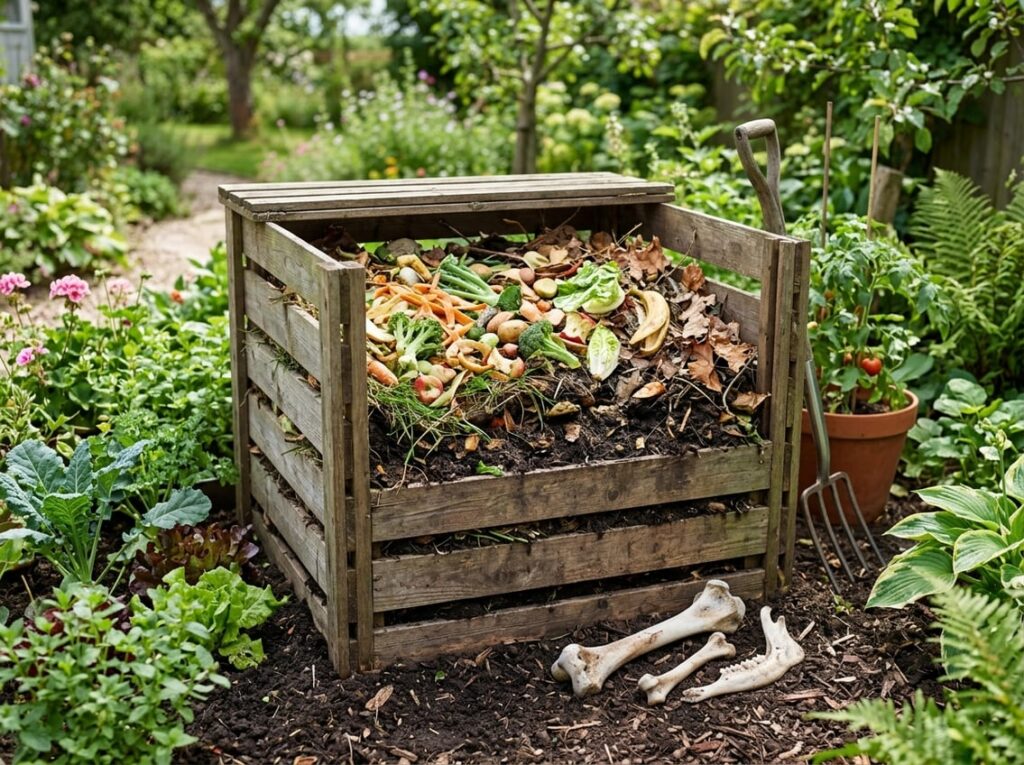
Why Composting Bones Challenges Most Home Systems
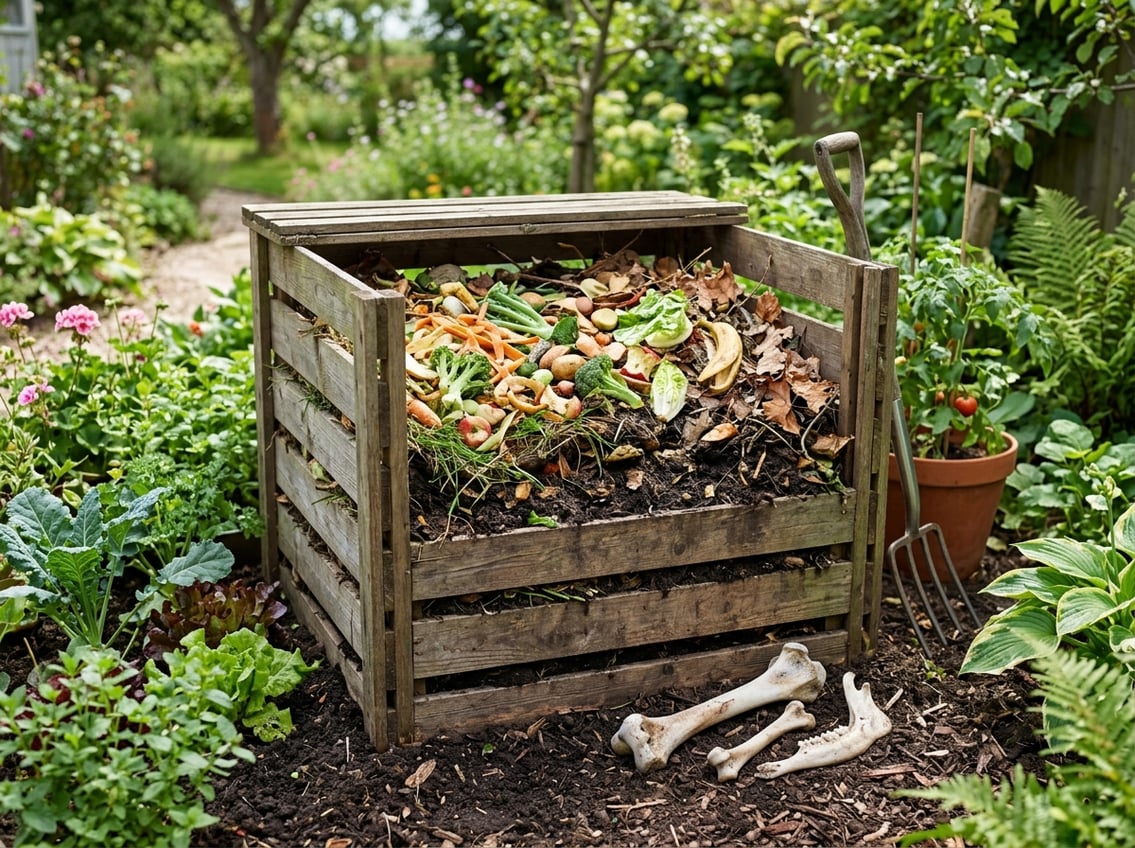
Bones are stubborn when it comes to breaking down. Their dense minerals and low moisture make it tough for microbes to do their thing.
The challenge with bones is threefold: the mineralized structure, dryness, and sheer hardness. Your average backyard compost pile just doesn’t get hot enough to handle bones.
Vegetable scraps and grass clippings seem to melt away in weeks, but a big bone? It can sit in your pile for years, barely changing. The microbes in your bin can’t really get through that tough outer layer.
Key factors that make bones difficult:
- Dense mineral structure blocks microbial access
- Low moisture content slows bacterial activity
- Hard outer surface prevents breakdown
- Large size increases decomposition time
Most home composters follow the “no meat or bones” rule for good reasons. Bones and meat attract pests like rats and raccoons.
They can also stink up your pile as they slowly rot away. Standard guidance for backyard composting almost always includes this restriction because home setups just don’t have what it takes for safe bone breakdown.
Quick Reference Guide: Bones as Compost Material
Yes, you can compost bones, but they come with some unique quirks. Bones have a carbon-to-nitrogen ratio of 15:1 to 20:1 and can take anywhere from 3 months to 3+ years to fully break down.
Key Characteristics:
| Property | Details |
|---|---|
| Decomposition Time | 3 months to 3+ years |
| C Ratio | 15:1 to 20:1 |
| Main Nutrients | Calcium, phosphorus, trace minerals |
Benefits of composting bones:
- Rich in calcium and phosphorus
- Adds trace minerals to soil
- Improves soil structure
- Reduces waste
Challenges:
- Decompose very slowly
- Attract animals and pests
- Need special processing
- Not great for regular compost bins
When you add bones to your composting process, you’ll need enough moisture, oxygen, and a thriving microbe community. Crushing bones into smaller pieces helps a ton.
The Science Behind Why Bones Resist Quick Composting
Bones are dense and mineralized structures. They’re mostly calcium phosphate wrapped in a matrix of collagen protein.
This combo makes bones incredibly strong, so they stick around long after veggies and leaves have vanished. The calcium compounds form a hard barrier that keeps microbes out.
Collagen, especially after cooking, is tough for bacteria to break down. Bones also don’t have much water, so microbes can’t work efficiently.
Out in nature, bones can take 1-3 years to disappear. Your backyard pile faces the same battle.
Most home piles only hit 90-120°F, but bones really need 140-160°F for efficient breakdown. Without those temps, you’ll keep finding bone bits in your compost for months.
The nutrients in bones are great for soil, but unfortunately, they also lure in critters like raccoons, rats, and even neighborhood dogs. That’s a headache you probably don’t want.
Animal products can carry pathogens, too. If your pile doesn’t get hot enough, those might stick around and cause trouble in your food garden.
Cooking bones makes the collagen even tougher, so it gets even harder for enzymes to break things down. It’s just a tricky process all around.
5 Advanced Methods That Successfully Compost Bones
1. Hot Composting Technique
Hot composting gives you the best shot at breaking down bones at home. You’ll need a pile at least 3 cubic feet to get things cooking.
Aim for a carbon-to-nitrogen ratio around 30:1. Turn the pile often to keep oxygen flowing, and make sure it’s moist—think wrung-out sponge.
Here’s how you can compost bones:
- Crush bones into smaller pieces before tossing them in
- Mix well with nitrogen-rich stuff like food scraps and grass clippings
- Cover with carbon-rich materials (leaves, straw, etc.)
- Check temperature with a compost thermometer—shoot for 150°F
- Turn weekly for even heat
Small bones might break down in 3-6 months. Bigger bones will need more time.
2. Bokashi Fermentation
Bokashi composting is a neat trick for prepping bones. This Japanese method uses fermentation to soften them up.
Toss bones and food scraps in a sealed bokashi bucket. Sprinkle on bokashi bran with effective microbes after each layer.
Keep the bucket sealed for 2-4 weeks. After fermenting, you can bury the bones in your garden or add them to your main compost pile.
The fermentation really speeds things up once the bones hit regular compost.
3. Electric Kitchen Composters
Electric composters are the new kids on the block for processing small bones. Some models actually handle chicken and fish bones pretty well.
| Composter Model | Bone Capability | Price Range |
|---|---|---|
| FoodCycler FC-50 | Small chicken and fish bones | $300-$500 |
| Lomi | Small bones on approved setting | $300-$500 |
| Vitamix FoodCycler | Small poultry bones | $300-$500 |
Just know the limits before you buy. Most can’t handle big beef or pork bones.
These machines dry and grind stuff instead of truly composting it, and they do use a fair bit of electricity.
4. Municipal Composting
Some commercial composting facilities handle bones way better than you can at home. They keep piles at higher temps for longer periods.
Check your local solid waste department for programs that accept bones or other animal products. Read their rules carefully—sometimes bones need their own bin.
You won’t get the nutrients back in your own garden, and trucking bones around does use energy, but it’s a hassle-free option.
5. Bone Meal Conversion
You can turn bones into bone meal for your garden. Clean off any meat first.
Bake bones at 400°F for 30-60 minutes to sterilize. Then grind them up with a heavy-duty grinder, a high-powered blender (for small bones), or even a mortar and pestle if you’re patient.
Bone meal gives your plants a direct boost of calcium and phosphorus. Spread it in your garden or mix it into your compost for slow-release goodness.
Step-by-Step: How to Speed Up Bone Decomposition at Home
If you want bones to break down faster, you’ll need to get creative. The trick is to attack their tough structure.
Pre-processing Preparation (15 minutes)
Collect bones from your meals in a dedicated container. Once you’ve got a batch, pick off any leftover meat.
To break down larger bones:
- Smash them with a hammer on a cutting board
- Use pruning shears for small, thin bones
- Try a saw for thick beef or pork bones (don’t forget safety gear)
Smaller pieces disappear way faster. Grinding bones exposes more surface for bacteria and acids to work on.
Acidic Environment Creation (1-2 weeks)
Drop your crushed bones in a sealable container. Pour in white vinegar (5% acidity) until the bones are covered.
Seal it up and stash the container somewhere out of the way. The vinegar starts dissolving the calcium phosphate.
After 1-2 weeks, bones should feel noticeably softer. Dump both the bones and vinegar into your compost pile, mix well, and cover with leaves or wood chips.
The “Bone Sauce” Method
Got extra garden space? Try the old-school “bone sauce” trick.
Dig a hole at least a foot deep. Toss in your crushed bones.
Cover with a mix of soil and composted manure, then add water until it’s moist. Put a lid over the hole to keep critters out.
Every few months, scoop out some “bone sauce” and dilute it as fertilizer. After 6-12 months, add whatever’s left to your compost.
Essential Safety Measures
A few safety tips when composting bones:
- Wear gloves when handling bones
- Keep bone-processing stuff away from food prep
- Wash your hands well afterward
- Store containers out of reach of kids and pets
- Keep compost hot enough to kill pathogens
Time Expectations
Here’s roughly how long bones take to break down:
| Bone Type | Decomposition Time |
|---|---|
| Small fish bones | 2-3 months |
| Chicken bones | 3-6 months |
| Pork ribs | 6-9 months |
| Beef bones | 9-12 months or longer |
Chicken and fish bones break down faster than bigger mammal bones. That’s just how it goes.
Better Alternatives: What to Do With Bones Besides Composting
Bone Broth Creation (8-24 hours)
Before tossing bones, you can pull out a ton of nutrients. Keep bones in a freezer bag until you’ve got enough.
Roast them at 450°F for 20-30 minutes for extra flavor. Simmer chicken bones for 8-12 hours or beef bones for 12-24 hours with water, veggie scraps, and a splash of vinegar.
Strain it all, and you’ve got a rich, nutritious broth full of calcium and collagen.
Strategic Burial
Direct soil burial is simple if you do it right. Dig a hole at least 18 inches deep.
Drop in crushed bones, cover with compost or manure, and fill in with soil. Mark the spot.
Next season, plant heavy feeders like tomatoes right above. The deep burial keeps pests away and gives roots access to nutrients.
Pet Food Supplementation
Some bones can work as pet treats—raw beef knuckle bones are good for large dogs, but never give cooked bones. Ground eggshells can add calcium to homemade pet food.
Always check with your vet before adding bones to your pet’s diet.
Zero-waste Disposal Options
If you can’t process bones at home, there are other ways. Some wildlife rehab centers accept bones for animal feed.
A few places have bone collection for industrial processing or waste-to-energy facilities.
Cost Comparison
| Method | Cost Range |
|---|---|
| Burial | Free |
| Bone broth creation | Free |
| Bokashi | $20-50 startup |
| Vinegar treatment | $2-5 |
| Hot composting setup | $50-100 |
| Electric composters | $300-500 |
Free options are the most wallet-friendly.
Quick Composting Guide by Bone Type
Chicken Bones
You can compost chicken bones in about 3-6 months if you use the right method. Chicken bones break down faster thanks to their hollow structure.
The thin walls let microbes get inside more easily. Hot composting or bokashi work best for composting chicken bones.
Beef Bones
Beef bones are dense and need a lot of patience. Expect them to take anywhere from 1 to 3 years to fully break down, even if you use tricks to speed things up.
Before tossing beef bones into your compost, break them up into smaller pieces. Pre-soaking them in vinegar can help soften things up a bit.
You might want to make bone broth first to get extra nutrients out before composting what’s left.
Fish Bones
Fish bones disappear much faster—just 2 or 3 months, usually. They’re smaller, have more cartilage, and break down easily because microbes can get at them from all sides.
If you add fish bones to your compost, bury them deep so you don’t end up with a parade of raccoons.
Raw vs. Cooked Bones
Raw bones usually break down 30-50% faster than cooked ones. Cooking dries them out and messes with the protein structure, which slows everything down.
Raw bones keep their moisture and enzymes, but they can carry more pathogens. Handle them carefully and make sure your compost heats up enough.
Size Matters
Decomposition Timeline by Bone Size:
- Small bones (under 2 inches): 3-6 months
- Medium bones (2-5 inches): 6-12 months
- Large bones (over 5 inches): 1-3+ years
Crushing bones can make them break down up to five times faster. It’s worth the effort.
7 Common Bone Composting Mistakes to Avoid
Overloading your compost bin with bones is a recipe for slow, stinky compost. Keep bones under 10% of your total compost volume.
Inadequate covering is a big mistake. If you don’t bury bones at least 8 inches deep and surround them with carbon-rich stuff like leaves or shredded paper, you’ll attract every critter in the neighborhood.
Poor placement can annoy the folks next door. Keep your compost with bones away from property lines and out of sight.
Neglecting wildlife protection means you might wake up to a mess. Use sturdy, animal-proof bins when composting animal remains.
Misunderstanding local regulations can get you in trouble. Always check your city’s rules before composting bones.
Improper moisture balance will stall decomposition. Aim for compost that feels like a wrung-out sponge.
Forgetting to crush larger bones just slows everything down. Break them up before tossing them in.
Making the Right Choice for Your Home Composting Situation
Apartment Dwellers
Small spaces mean you’ve gotta get creative with bones. Bokashi fermentation is a solid pre-treatment, and you can take the results to a community compost site.
Electric kitchen composters are handy but only work for small bones. Some folks make bone broth first, then toss leftovers in the trash or green bin. If you’re lucky, a local community garden might let you bury bones.
Suburban Gardeners
A little more room opens up your options. You can set up a hot composting system far from the fence line.
Burying bones in future garden beds works well, and making bone meal gives your plants a quick nutrient boost. Combining these—like making broth, then composting—lets you use every bit.
Environmental Impact Comparison
Different methods have different environmental footprints:
- Lowest impact: Composting or burying bones on-site (hot composting or burial)
- Medium impact: Using municipal composting, which needs transport
- Higher impact: Sending bones to the landfill, where they create methane and waste nutrients
Think about your time, space, local rules, and garden goals. Some methods need more attention, but others give nutrients faster.
Frequently Asked Questions About Composting Bones
Is it legal to bury bones in my backyard?
Most places let you bury small amounts of kitchen bones on your property, as long as you dig at least 12 inches down and stay away from wells or streams.
But local rules can be weirdly specific. It’s smart to check with your city’s code office before you start digging.
How can I stop my bone compost from smelling bad?
Cover bones with at least 8 inches of “brown” material. Good options:
- Dry leaves
- Straw
- Shredded paper or cardboard
- Wood chips
Keep things damp, not soggy. Give your pile a turn every now and then so it can breathe. If you use a closed bin, make sure it’s got air holes.
Will adding bones to my compost attract rats and other pests?
Honestly, yes—bones will draw animals if you don’t protect them. Use a bin with a tight lid that rodents can’t pry open.
Always bury bones deep in the center of your pile, not near the top. Hardware cloth under open piles helps keep diggers out.
How long will bones take to break down in my compost bin?
It depends on the bone and your method:
| Bone Type | Standard Composting Time |
|---|---|
| Small bones (fish, chicken) | 3-6 months |
| Large bones (beef, pork) | 1-3 years |
Crushing bones first speeds things up. Hot composting and soaking bones in vinegar help, too.
Can I put bones in my city’s green waste collection?
Most city green bins don’t take bones. Some newer commercial composting sites do accept all food scraps, bones included.
Check your local waste department’s website or give them a call to be sure.
What’s the fastest way to compost chicken bones at home?
Crush chicken bones into small bits first. Then use hot composting or bokashi pre-treatment.
With both, chicken bones can break down in just 2-3 months.
Are cooked bones better or worse for composting than raw bones?
Cooked bones break down more slowly because they’re drier and tougher. Raw bones compost quicker but can carry more bacteria and attract pests.
Cooked bones are usually safer for home composting, even if they take longer to disappear.
Frequently Asked Questions
Are cooked and raw animal bones safe to add to a home compost pile?
Yep, both cooked and raw bones are safe in your home compost. Bones are compostable and add nutrients to your soil.
Cooked bones usually break down faster because they’re brittle. You can compost bones from chicken, beef, pork, fish—whatever’s left from dinner.
They add calcium and phosphorus, which your garden will love.
Will adding bones attract pests or create odor problems in a backyard compost system?
Bones can bring pests and smells if you don’t manage them well. Animals like rats, raccoons, and dogs might dig for a snack.
To avoid this:
- Bury bones deep in the pile
- Cover with 8-10 inches of brown material (leaves, wood chips)
- Use a closed bin with a tight lid
- Keep compost moist, not wet
- Turn the pile now and then
Good composting habits help keep critters and odors away. If your pile gets hot—130 to 160°F—bones break down faster and animals lose interest.
How long do bones typically take to break down in compost, and what affects the timeline?
Bones are stubborn. Small chicken bones might go away in 3-6 months if your pile gets hot. Big beef or pork bones? You could be waiting 1-2 years, maybe longer.
A few things speed things up:
- Size – Smaller bones disappear faster
- Temperature – Hotter piles = quicker breakdown
- Moisture – Compost should stay damp
- Microbial activity – Lots of bacteria and fungi help
- Cooked or raw – Cooked bones usually break down a bit faster
Your composting setup matters, too. Backyard piles are slower than specialized animal composters.
What methods can speed up bone decomposition before adding them to compost?
You can help bones break down faster by prepping them. Breaking them up gives microbes more to chew on.
Try these:
Crush or grind bones – Use a hammer, meat grinder, or even a food processor for small bits.
Boil them first – Cooking softens and brittles bones, making them easier to compost.
Pressure cook – This makes bones fall apart even more.
Garden shears – Great for snipping up chicken or fish bones.
Smaller pieces always break down faster. Prepping bones can really cut down composting time.
Do municipal green bin programs generally accept bones, and what rules commonly apply?
Most city composting programs do take bones in green bins. Industrial sites run hotter than home compost, so bones break down safely.
Check your local rules, though—some cities are stricter than others.
Usually, you’ll:
- Put bones in the green bin with other food scraps
- Avoid tossing bones in recycling or trash
- Keep bone chunks reasonable in size
- Mix bones with other organic stuff
Municipal composting can handle things that backyard piles can’t. Your local waste department will have the details for your area.
What food scraps should be kept out of home compost to avoid contamination or pest issues?
Some food items just don’t play nice in a home compost pile. They can draw in pests, smell terrible, or simply refuse to break down.
Keep these out of your backyard compost:
- Dairy products (milk, cheese, yogurt, butter)
- Oils, fats, and grease
- Pet waste from dogs or cats
- Diseased or insect-infested plants
- Treated or painted wood
- Coal or charcoal ash
Use caution with these items:
- Meat and bones (only if you have proper management techniques)
- Citrus peels in large quantities
- Bread and baked goods
- Cooked food with oils or seasonings
Honestly, your compost will thrive on veggie scraps, fruit peels, coffee grounds, eggshells, yard clippings, and plain old paper products. Choosing appropriate materials makes a big difference in keeping pests away and your compost healthy.